Containers headed inland by rail now spend more than seven days on the terminal at the two biggest U.S. ports, while trucked boxes leave in about three. For importers serving the interior, that gap is becoming a planning number of its own.
Key Takeaways
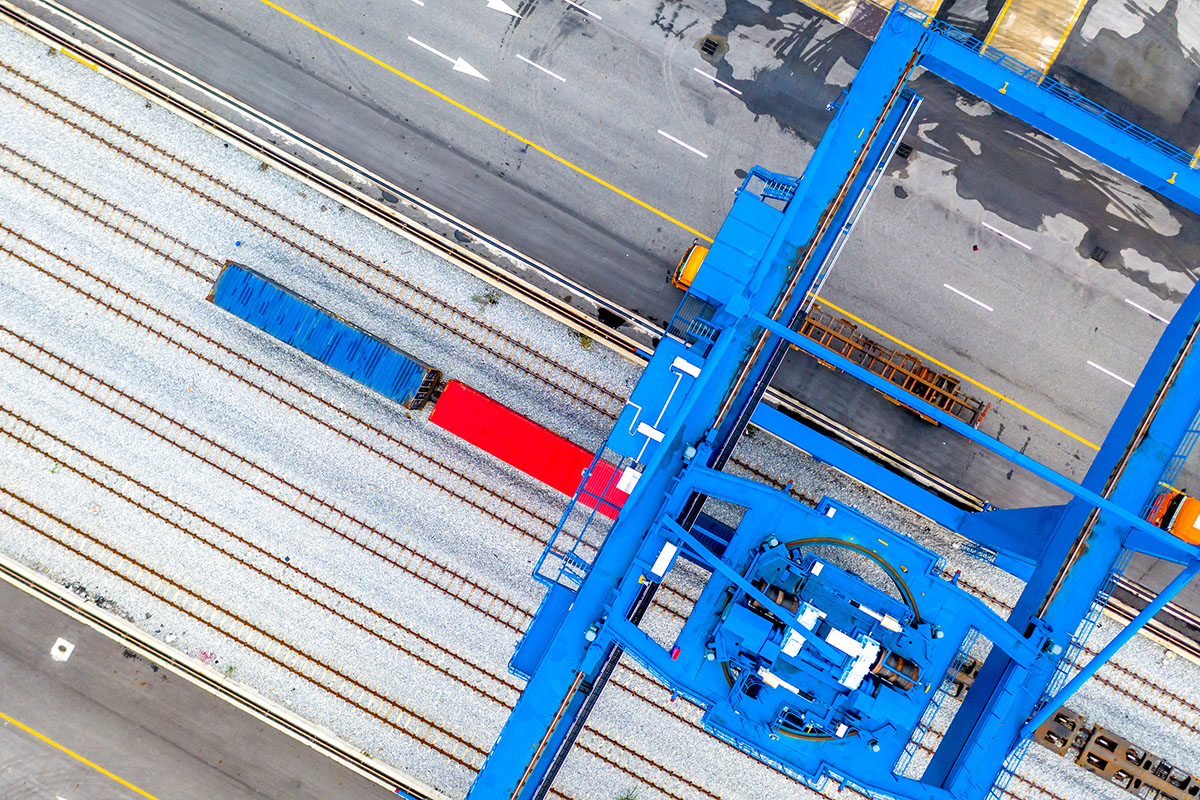
For most of this year, the question at the San Pedro Bay ports has been how much cargo would arrive. The more useful question for inland shippers is how long it stays. A container leaving Los Angeles or Long Beach by truck is typically gone in about three days. A container waiting for a train now sits more than twice as long, and that difference lands directly on the importers in Chicago, Dallas, Memphis and other interior markets whose freight moves by intermodal rail.
Rail-bound import containers spent an average of 7.19 days at Los Angeles and Long Beach marine terminals in September, compared with 3.18 days for truck-bound imports, according to Pacific Merchant Shipping Association figures cited in C.H. Robinson's November drayage update. The report attributes the delay mainly to equipment, stating that "Limited railcar availability is contributing to elevated dwell time." The Port of Los Angeles set an all-time throughput record in September, which put more boxes in line for the same railcars.
The climb has been steady. Rail dwell was 4.41 days in March and 5.06 days in April, FreightWaves reported in May, at a point when truck dwell had held under three days for 15 consecutive months. By August, rail dwell reached 6.75 days, up from 6.34 in July, while truck dwell eased to 2.95 days. That report linked the rise to network slowdowns at Union Pacific and BNSF in late spring, which coincided with a modest import surge.
In other words, the trucking side of the port has absorbed record volume with little change in dwell. The rail side has not, and it has been losing ground for six months.
A snapshot from late October shows the scale of the queue. As of October 26, about 35,688 import containers were waiting for on-dock trains across the two ports, and 10,562 of those had been on terminal for at least nine days, according to port rail reports compiled for FreightWaves. Los Angeles held 19,626 of the waiting containers, with 8,133 of them, or 41.4%, at nine days or more. Long Beach held 16,062, with 2,429, or 15.1%, past the nine-day mark.
Port leaders did not dispute the numbers. Gene Seroka, executive director of the Port of Los Angeles, said of rail and truck dwell that "both are higher than we would like." He pointed to an import and export imbalance as shippers ordered more than usual for the time of year. Port of Long Beach chief executive Noel Hacegaba noted that smaller inland rail hubs face longer delays as the national network absorbs more cargo, and the port expects its Pier B on-dock rail facility to cut ship-to-rail time from four days to 24 hours once it is running. Union Pacific said its buffer resources had positioned it to maintain fluidity, while BNSF offered no comment beyond its customer advisories.
The queue did not clear in October. Rail dwell approached 10 days in Los Angeles and 8 days in Long Beach during the month, and some terminal containers waited as long as 30 days, according to JOC reporting summarized in Intelligent Audit's November 16 shipper brief. The same brief notes that retailers have raised their fourth-quarter import forecast, with monthly arrivals above 2 million TEUs through December, so the pressure on railcars is not about to ease.
Four extra days on a terminal is not just a port statistic. For an importer whose distribution center sits 1,500 miles inland, it is four more days of safety stock, four more days before goods can be sold, and a higher chance that free time runs out before the box ever reaches a train. Those costs rarely appear in an ocean rate quote, and they are easy to miss when a supply chain plan assumes rail service runs at its normal pace.
The wider drayage market offers little slack to compensate. The same C.H. Robinson update notes that Norfolk shortened its gate window on October 13, with inbound portals now closing at 4:00 p.m., and that Savannah faces chassis shortages because extended dwell and longer cycle times keep chassis tied up, conditions it expects to push private chassis rates higher heading into 2027. Shifting freight from one gateway to another is possible, but every alternative now carries its own friction.
These steps help keep a rail backlog at the port from turning into an empty shelf at an inland store.
The record volumes at Los Angeles and Long Beach have been handled better than many expected on the truck side of the gate. The rail side is where the strain shows, and it shows up weeks later in inland inventory. Importers that build the current rail dwell into their plans now will have fewer surprises when the holiday freight finally reaches the interior markets.


Guide
When rail dwell adds four days to inland deliveries, inventory strategy and supplier coordination have to absorb the slack. Nulogy's playbook covers how supply chain leaders manage demand variability and partner risk when lead times stop behaving.
Download

Report
Railcar shortages at the ports rarely show up in an ocean rate quote, which makes them exactly the kind of blind spot GEP examines. The report looks at the risks supply chain leaders underestimate and how resilient organizations prepare for them.
Download

Guide
Shippers moving urgent freight from rail to road need more turns from the trucks they already run. IntelliShift shows how fleet operators use routing and operational visibility to raise productivity without adding vehicles or headcount.
Download
U.S. container imports reached a record 2,674,808 TEUs in October, topping the May 2022 peak. Inland trucking capacity is tighter than a year ago, and the U.S.-China port fee suspension now runs only to January 10.
J.B. Hunt moved 18% more Eastern intermodal loads in the third quarter as truckload rates climbed and rail pricing barely moved. Chassis shortages are already stretching transit times in East Coast markets.
