C.H. Robinson's contract data shows loads over 600 miles going much deeper into routing guides than they did last October, while short hauls hold up better. Tender rejections are more than double last year's, and the Thanksgiving and year-end spikes have not arrived yet.
Key Takeaways
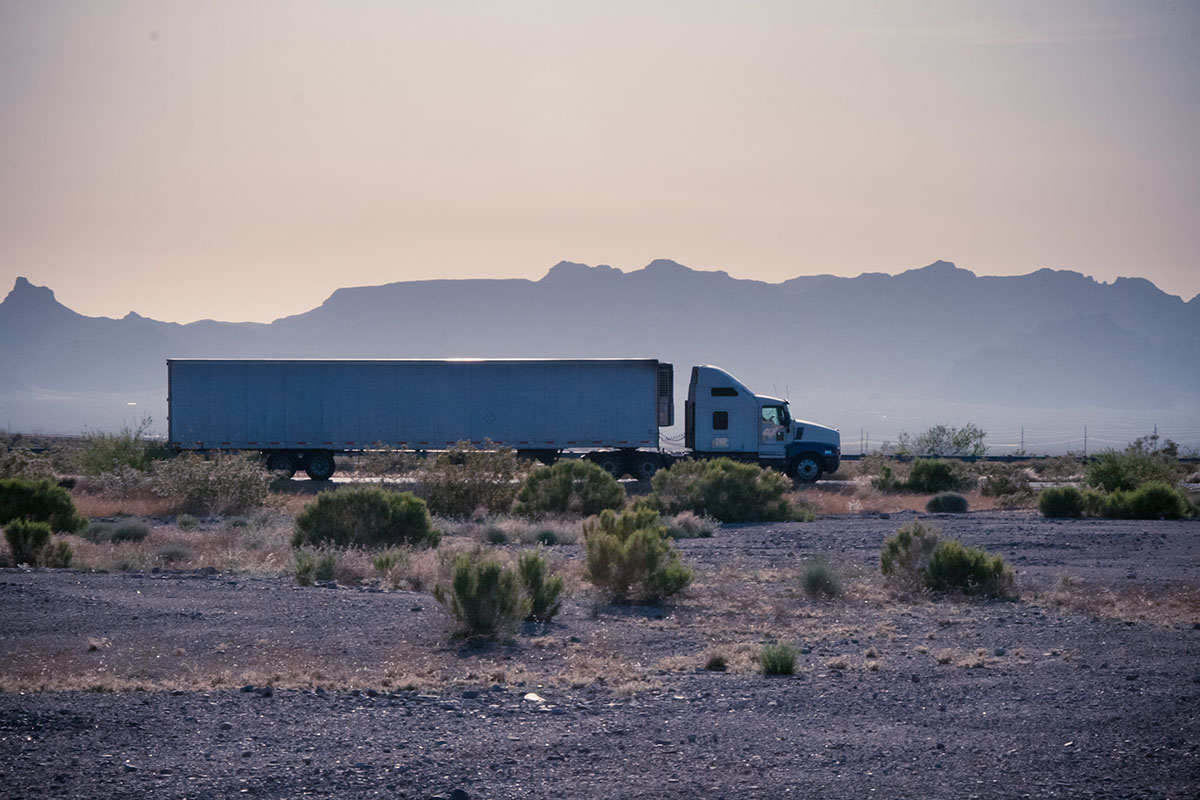
Routing guides are built on a simple promise: the primary carrier takes the load, and if it does not, the next one down the list will at a price agreed months ago. For most of the last three years that promise held, because spot trucks were cheap and plentiful whenever a contract carrier said no. This autumn, the promise is breaking first on the longest lanes, and the two weeks of the year that usually stress a routing guide the most are still ahead of shippers.
In its November truckload update, C.H. Robinson reported route-guide depth across its managed contract freight, a scale on which 1.0 is perfect and 2.0 is extremely poor. October's North American average was 1.36, a slight improvement on September. The split by distance is the story. Hauls over 600 miles measured 1.49, down from 1.54 in September but far above the 1.24 recorded in October 2025. Hauls under 400 miles came in at 1.26, against 1.13 a year earlier. Regionally, depth ranged from 1.22 to 1.52, with the Midwest improving 7.6% and the West worsening 1%.
The report ties the long-haul weakness to labor. Recruiting and retention "remain major challenges for long-haul fleets," it says, with carriers leaning on higher pay and referral bonuses, while local and drayage fleets report considerably better recruiting conditions. Carriers also told C.H. Robinson that operating costs continue to outpace rate improvement, that fleet expansion remains limited, and that replacement cycles are lengthening. Some carriers are losing enough money on fuel that they are leaving the market. About 16% of truckload miles, it adds, are non-revenue miles.
The timing matters. Route-guide depth first crossed 1.3 in late November 2025, when failures rose to about 5%, and C.H. Robinson says holiday periods have produced clear spikes in failures. It expects conditions to stay relatively stable through the first half of November, then tighten around Thanksgiving and rise into December, with reduced driver availability cited as one reason. Its 2026 spot cost forecasts now stand at plus 31% year over year for dry van, 32% for refrigerated and 28% for flatbed.
Broader indexes show the same tightening. The Logistics Managers' Index transportation capacity reading fell to 38 in October, below the 50 line that separates growth from contraction and down from 54.5 a year earlier, according to FreightWaves. It was the 11th consecutive month of contraction. The SONAR Tender Rejection Index averaged about 13.5% in October, compared with 5.73% in October 2025, and sat at 12.86% on November 3. New truckload contracts were priced 13.11% above the rates they replaced. Julie Van de Kamp said she expects capacity to stay constrained "certainly into 2027."
Not every lane is equally tight. FreightWaves analyst Zach Strickland noted that dry van rejections have drifted lower in recent months but remain around 11%, after more than 12 months of elevated readings. Savannah rejections have fallen to nearly 6%, while in Los Angeles 67% of rates are moving higher and spot runs roughly 15% above contract. Reefer rejections have passed both the Labor Day and July 4th peaks. "The costs have really outpaced the revenue growth gains," Strickland said.
A routing guide that falls through to the spot market on long lanes is now falling through to a market priced far above the contract it replaced. Logistics Focus analysis
Shippers have two standard answers to long-haul failures: move freight to rail, or pay spot. Both cost more than they did. Chris Pickett, chief commercial officer at Flock Freight, told FreightWaves that spot truckload rates rose 41% year over year through October and that contract rates have reset 10% to 12% higher. He expects spot to climb another 10% to 15% before a cyclical peak of roughly 45% to 50% above year-ago levels, and contract rates to reach 15% to 20% above year-ago levels by mid-2027. He said shippers are shifting freight to intermodal and adopting shared truckload, which he put at 5% to 30% below full truckload for partially filled trailers.
Intermodal is the natural home for long-haul freight, but late October showed how concentrated that option is. Eight inches of rain in three days at Laguna, New Mexico, where the annual average is 10, closed BNSF's Southern Transcon for about 60 hours starting October 24, FreightWaves reported. BNSF's intermodal volume for that week fell 0.4% year over year after a 14% gain the week before. Days later, a CSX technology outage lasting nearly 30 hours cut its train counts by 46%, according to RailState sensors; CSX said it was not a cyberattack. Neither event was long, but both landed on the lanes shippers are counting on to absorb freight that trucks will not take at contract rates.
The October improvement on long hauls, from 1.54 to 1.49, is real but small against the distance from last year's 1.24, and it comes before the part of the calendar that has historically produced the sharpest spikes in failures. Shippers who treat long-haul freight as its own market, with its own capacity plan, will spend the holidays managing exceptions. Those who do not will spend them buying spot trucks at the top of the cycle.


Report
The route-guide data in this story comes from managed transportation, where a provider watches tender acceptance across many shippers at once. GEP looks at what AI-augmented managed services can now take on in procurement and supply chain.
Download

Guide
Locking in holiday capacity early only works if production and packaging partners ship on the plan the carriers were promised. Nulogy makes the case that synchronized networks beat fragmented ones on cost, speed and service.
Download

Guide
With about 16% of truckload miles running empty and long-haul drivers hard to hire, the cheapest capacity is the miles fleets already drive. IntelliShift shows how routing and operational visibility raise output without adding trucks or drivers.
Download
Knight-Swift's brokerage works with about 70% fewer carriers than two years ago, and its CEO expects stricter vetting to remove the cheapest, least compliant capacity. With FMCSA purging training providers and carriers eyeing double-digit renewals, 2027 bids face a smaller pool.

A record 76% of private fleets use their trucks as leverage against for-hire pricing as tender rejections run near 14%. The hedge works, but it moves safety, maintenance and insurance risk onto the shipper's own books.
