A record 76% of private fleets now use their trucks as leverage against for-hire pricing, just as tender rejections run near 14% and for-hire tractors leave the road. The hedge is working. It also moves safety, maintenance and insurance risk squarely onto the shipper's own books.
Key Takeaways
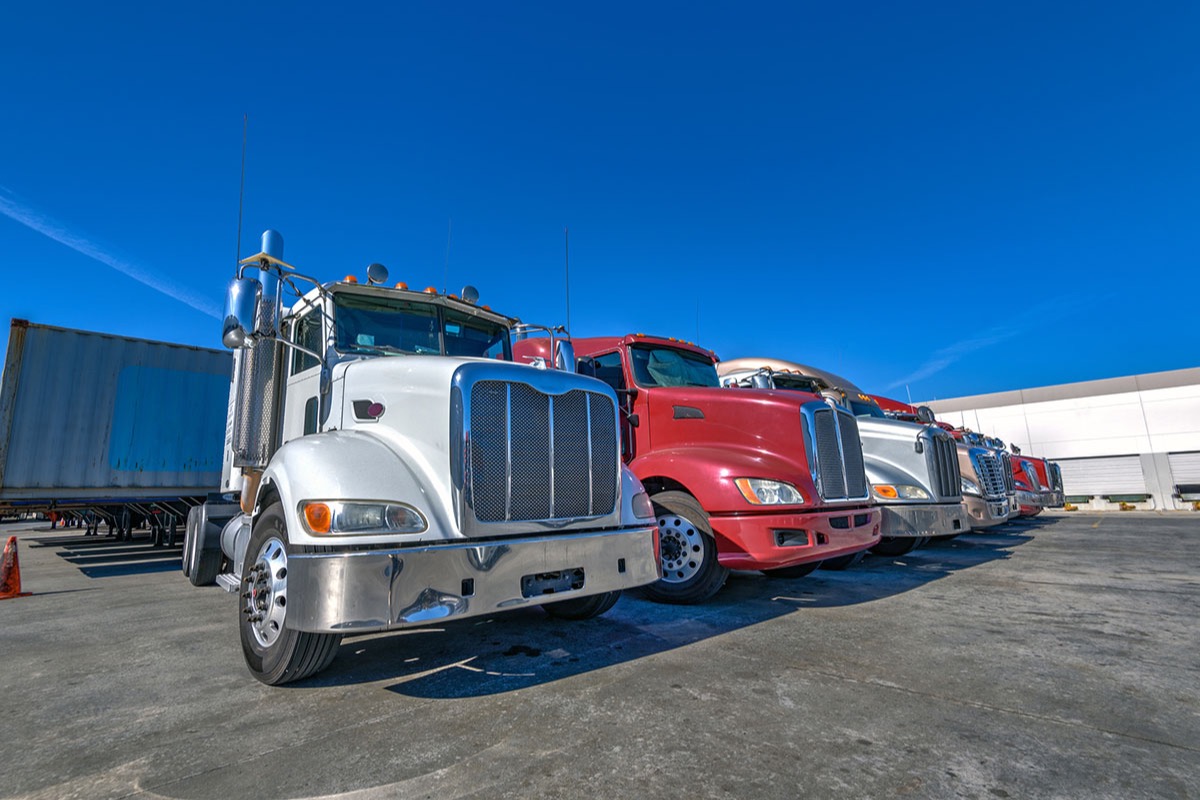
For most of the last three years, the private fleet looked like an expensive habit. Spot capacity was cheap, carriers were hungry, and a shipper running its own tractors was paying for control it did not strictly need. That math has flipped. With for-hire capacity draining out of the market and prices climbing toward record territory, the companies that kept their own trucks are now using them as a bargaining chip, and a growing number of shippers are reconsidering whether owning the truck is cheaper than renting the driver.
The pressure on the for-hire side is structural, not seasonal. FreightWaves SONAR data published October 7 shows tractors in new for-hire fleets fell to 19,520 in August, about 14% below the first-half average, while total for-hire tractors fell about 51,000 in the same month. The SONAR Truckload Rejection Index has hovered near 14% in 2026, roughly three times its 4% to 6% range from 2023 to 2025.
Operating authority counts are rising, but they are not putting trucks on the road. Only about two in three new interstate registrants now buy liability insurance, down from more than nine in ten in 2019. ATRI data cited in the same analysis shows liability and cargo premiums rose 3.9% in 2025 to about 10.6 cents a mile, and roughly 10% of carriers' trucks sat without a driver last year. Enforcement adds to the drain: English language proficiency checks are removing about 2,700 drivers from service a month, according to SONAR.
Shippers are feeling it in their invoices. The September Logistics Managers' Index put transportation prices at 92.7, up from 90 in August, with the pricing index at 90 or above in five of the past six months. Transportation capacity fell 5.6 points to 34.4, its tenth consecutive month of contraction, and respondents expect little relief, with 12-month forecasts of 86.1 for pricing and 37.9 for capacity.
Against that backdrop, the National Private Truck Council's 2026 Benchmarking Survey, drawn from 89 member companies, reads less like a fleet report and more like a sourcing strategy. A record 76% of respondents said they use their private fleet explicitly as leverage against for-hire carrier pricing. Private fleets handled 72% of their companies' outbound volume, the second-highest share in the survey's history, and 42% of inbound. NPTC also reported that the split of U.S. over-the-road freight has shifted from 50/50 to 55/45 in private fleets' favor.
The fleets are squeezing more out of the equipment they already own. Power units now run 13.1 hours a day, up from 11.9 in 2024. Trailer dormancy dropped from 39% to 32%, and weekly trips per trailer rose from 5.7 to 7.6. Customer service (85%) and supply chain control (73%) remain the top reasons companies run their own trucks, and 71% expect to expand their fleet over the next five years, against 9% who expect to contract.
A private fleet used as leverage is a procurement decision. It deserves the same cost discipline as any carrier contract it is meant to beat. Logistics Focus analysis
Leverage has a price, and it does not show up in a rate comparison. When a shipper moves freight from a carrier onto its own tractors, it also takes on the liability, maintenance and compliance exposure the carrier used to absorb. NPTC found that 73% of private fleets rank safety as their top operational challenge. 84% carry insurance above DOT minimums, and 77% operate with a self-insured retention averaging $7 million, meaning the first several million dollars of any serious claim comes straight off the company's own balance sheet.
The safety record helps make that bet rational. NPTC members reported a DOT recordable crash rate of 0.65 per million miles, about three times better than the general motor carrier average, and 89% run collision warning, lane departure warning and in-cab cameras. But that performance is the product of sustained investment in technology, coaching and driver pay averaging more than $92,000 a year, not a default property of owning trucks.
Maintenance is shifting too. Full-service leasing rose to 42% of fleets in 2025 from 28% in 2024, and 77% outsource at least part of their maintenance. Roadside breakdowns ran 4.7 per 100,000 miles, led by emissions equipment (58%) and tires (54%). Each of those outsourcing choices is effectively another supplier relationship, and each adds a system, a data feed and a contract to manage alongside the fleet itself.
The private fleet is no longer a legacy cost center waiting to be outsourced. In a market where carriers are rejecting one load in seven and prices sit near record highs, it is one of the few levers a shipper fully controls. The companies that get the most from it will be the ones that manage it with the rigor of a sourcing program and the discipline of a safety program at the same time.


Guide
Three in four private fleets now serve as a bargaining chip in carrier negotiations. GEP shows how procurement teams use analytics and smarter supplier relationships to turn that kind of leverage into measurable sourcing value.
Download

Guide
With a $7 million average self-insured retention, a private fleet's safety, compliance and maintenance gaps land on the shipper's balance sheet. IntelliShift explains how to break down those silos into a single program that lowers total cost of operations.
Download

Report
Full-service leasing jumped from 28% to 42% of private fleets in a year, adding lessors and data feeds to every operation. Lytx offers a framework for calculating what running safety and performance across disconnected systems actually costs.
Download
86% of carriers recognize a driver is at risk less than 30 days before departure or only at resignation, and none spot it more than 60 days out. With 58.1% of drivers job hunting, retention has become an early-warning problem.

Two in three enterprise shippers say carrier rates and surcharges change frequently, yet only 13% benchmark rates outside the annual bid. With spot rates forecast up 30% and LTL increases arriving months early, the gap is review cadence, not technology.
