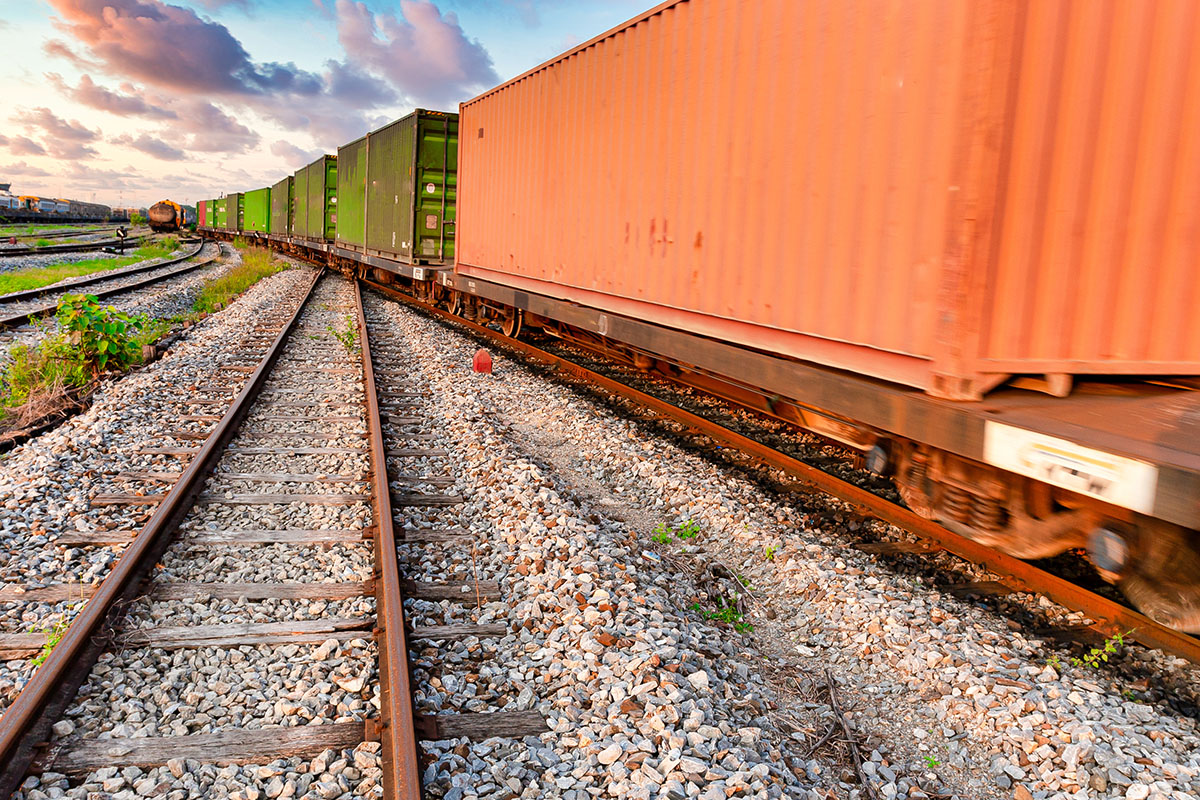
J.B. Hunt moved 18% more Eastern intermodal loads last quarter as truckload pricing climbed and rail pricing barely moved. The conversion is real, and so are the equipment shortages showing up on shorter East Coast lanes.
Key Takeaways
For three years, intermodal was the mode shippers talked about in bid season and then quietly skipped. That has changed. With truckload spot rates forecast to rise by nearly a third this year and routing guides still failing more often than they used to, shippers are moving freight off the highway and onto rail at a pace the industry has not seen in more than a decade. The price signal is doing exactly what it should. The question for the 2027 bid is whether the equipment on the rail side can keep up with the freight arriving at the ramp.
The pressure starts on the truck side. In its October truckload update, C.H. Robinson forecasts U.S. spot cost per mile rising 30% year over year in 2026 for dry van, 31% for refrigerated and 28% for flatbed, followed by roughly another 10% in 2027 across all three. Routing guide failures peaked at 7.5% over the summer, eased to nearly 5%, then climbed back above 6% in recent weeks, which the firm says remains significantly higher than previous years. Refrigerated spot rates including fuel reached a record $3.60 a mile in September, and diesel is above $8 a gallon in parts of the West Coast. Carriers also report that fuel surcharges are failing to cover idle time.
Rail pricing has not followed at the same speed. J.B. Hunt's third-quarter results, released October 15, show the gap plainly. The Arkansas Democrat-Gazette reported that revenue per load excluding fuel surcharges in the carrier's truckload segment rose 29% year over year. In its intermodal segment, FreightWaves reported, revenue per load excluding fuel rose just 2%. Strip out fuel, and the cost of moving a box by rail barely moved while the cost of a truck jumped by more than a quarter.
That spread was already wide before the third quarter. FreightWaves reported in July that SONAR's Intermodal Contract Savings Index showed domestic intermodal about 30% cheaper than truckload on a contract basis, well past the 10% to 15% discount J.B. Hunt says is typically needed to pull freight off the road. J.B. Hunt's intermodal president Darren Field described truck-to-rail conversion as running at levels not seen in more than a decade.
The third-quarter numbers show where that freight is landing. J.B. Hunt's intermodal loads rose 8%. Volumes in its Eastern network, where lanes are shorter and trucks have traditionally dominated, grew 18%, while transcontinental loads rose only 1%, and average length of haul declined 3%. The Democrat-Gazette described shippers as converting to intermodal from trucking at a solid clip, and the conversion is landing on exactly the shorter lanes where rail used to struggle to compete.
C.H. Robinson's intermodal update describes the same shift from the shipper's side. In September, carriers became more selective with freight, pushing more of it onto intermodal, particularly on lanes between 550 and 1,500 miles. The firm says early-2026 conversion was driven mainly by cost after diesel rose quickly, but recent demand increasingly reflects tighter truck capacity and a need for reliable long-haul service. Intermodal, in other words, is no longer only the cheaper option. For a growing share of lanes, it is becoming the available option.
The rail network itself is holding. C.H. Robinson says Class I railroads continue delivering strong service, with train speed, locomotive utilization and fluidity favorable by historical standards. The constraint sits at the edges of the network. In several East Coast markets, the shift has created chassis shortages and contributed to longer transit times, and the firm names New York and New Jersey, Baltimore, Harrisburg, Toledo, Chicago, Atlanta, Memphis and Charlotte as markets seeing equipment pressure. It also warns that localized chassis and container shortages are becoming more common in faster-growing markets.
Prices are starting to respond. C.H. Robinson reports upward spot pricing pressure in markets where intermodal utilization is highest and expects contract pricing to be steady to higher heading into 2027, with West Coast origins rising fastest. FreightWaves noted in July that J.B. Hunt's container fleet was more than 90% utilized in the second quarter, the first time in several quarters. The 2% linehaul increase in the third quarter is unlikely to hold if that utilization keeps climbing through bid season.
J.B. Hunt's own margins hint at the cost of running a stretched network. Revenue rose 20% to $3.68 billion, yet operating income rose just 2%, to $247.1 million. Higher driver expenses, equipment-related costs and insurance and medical claims partly offset the gains. Moving more freight is not the same as moving it cheaply, and that cost eventually reaches the shipper’s rate sheet.
The economics favor rail on a widening set of lanes, and the conversion is sensible. What shippers need to avoid is treating intermodal as a fixed discount that will be there whenever the truck market tightens. The capacity is real, but it is not unlimited.
The shippers moving freight to rail this year are reading the market correctly. Truck costs are rising far faster than rail, and the service on the rails is holding. The risk is in assuming the spread will last. As more freight converts on shorter Eastern lanes, the scarce resource is shifting from trucks to chassis and containers, and the shippers who plan for that now will keep the savings that the rest will find have already been priced in.


Guide
Switching a lane to rail adds transit days that ripple into inventory and production plans. Nulogy's playbook covers the inventory strategy and supplier coordination that keep a slower, cheaper network from becoming a service failure.
Download

Guide
A blended truck and rail award only pays off if someone re-runs the mode decision as rates move. GEP explains how procurement teams are using AI systems to coordinate those cross-functional decisions continuously instead of once a year.
Download

Guide
Every intermodal load still starts and ends on a truck, and drayage is where chassis shortages turn into dwell. Motive covers how fleets use AI for route optimization and predictive maintenance to keep those short hauls moving.
Download
Contract manufacturers quoting reshoring projects doubled to 32% in a year, and 60% of reshoring OEMs cite logistics savings. Those savings now run through a truck market with tender rejections near 14% and diesel above $6.

Warehousing capacity fell 14.2 points to 39.3 in September, its fastest contraction since March 2022. Upstream firms holding holiday stock are absorbing most of the squeeze, and smaller firms are losing room fastest.
