A new survey shows reshoring moving from talk to quotes on the shop floor. The logistics savings manufacturers are counting on now depend on a truck market that is losing capacity every month.
Key Takeaways
Reshoring has been a conference-stage talking point for a decade. This year it started showing up in the order books of the companies that would actually do the work. Contract manufacturers, the plants that make and pack goods for brand owners, report that the share of them quoting reshoring projects has doubled in twelve months. The catch is on the other side of the loading dock. Production that comes home trades an ocean leg for domestic truck miles, and the U.S. truck market is tightening, not loosening, just as that freight starts to arrive.
The 2026 USA Reshoring Survey, released by the Reshoring Initiative and Regions Recruiting, polled 249 manufacturers: 118 original equipment manufacturers and 131 contract manufacturers. Among OEMs, 36% said they had reshored or were actively reshoring additional production in 2026, up from 29% in 2025, and 63% planned U.S. capital spending in 2026 or 2027 to support reshoring or other domestic expansion.
The sharper signal came from contract manufacturers. 32% were quoting reshoring projects, up from 16%. 79% said at least some customers had discussed reshoring with them in the past year, and 53% cited geopolitical risk as a reason customers want domestic suppliers, more than double the 24% who said so in 2025. The pipeline still leaks, though. 60% said customers importing from China or Taiwan were at least discussing de-risking, but only 19% reported active transitions, and 94% said price is the main reason they lose orders to imports.
Reshoring Initiative founder Harry Moser framed the problem as instability rather than cost. As SupplyChainBrain reported, he said manufacturers can adjust to known costs, but "what is much harder to manage is a moving target." The survey bears that out: 57% of OEMs named policy uncertainty as their primary challenge, far ahead of market pricing at 15%.
Among OEMs that reported operational impacts, 70% cited faster speed to market, 65% cited better fulfillment or on-time delivery, and 60% cited logistics savings. Those are reasonable expectations when a product no longer crosses an ocean. But the domestic leg that replaces it is being priced in a very different market from the one most reshoring business cases were built on.
FreightWaves' capacity analysis puts the SONAR truckload rejection index near 14%, roughly three times its 4% to 6% range from 2023 through 2025. Over the three years to October 2026, rejections rose 268% while truckload volume rose only 9%. Tractors in newly formed for-hire fleets fell to 19,520 in August, about 14% below the first-half average, and total for-hire tractors dropped by about 51,000 that month. ATRI data cited in the piece shows about 10% of carriers' trucks sat without a driver in 2025. The conclusion is blunt: the market is tight because trucks are leaving, not because freight is surging.
Fuel adds a second variable. The DOE/EIA benchmark diesel price fell 18.3 cents to $6.199 a gallon in early October, its second straight weekly decline, but that is still only 33 cents below the record $6.529 set two weeks earlier. An executive order now allows red-dyed diesel on the road with a deferral of the 24.3-cent federal excise tax, yet running red dye on the highway remains illegal in most states. For a plant that moved production closer to customers, every one of those cents now lands on a truck rather than a container ship.
The survey's quietest number may be its most important. Use of total cost of ownership to compare domestic and offshore sourcing rose from 30% in 2025 to 40% in 2026. That is progress, but it means most respondents are still deciding where to make things without a consistent method that captures freight, duty, inventory and risk side by side. "There's a huge opportunity just to do the math correctly," Moser told SupplyChainBrain.
Labor compounds the uncertainty on the production side. 66% of respondents rated hiring technicians such as welders and machinists as very difficult or at crisis levels, and 60% said the same of maintenance and repair technicians. SupplyChainBrain reported that 64% of contract manufacturers said recent deportations are hampering recruiting. A reshored line that cannot be staffed on schedule pushes output into a narrower window, which tends to mean more expedited, less consolidated freight at exactly the moment truck capacity is scarce.
None of this argues against bringing production home. Speed and delivery reliability are real gains, and contract manufacturers clearly have the demand. It argues for pricing the domestic network as carefully as the plant itself.
The survey shows reshoring finally moving from intention to quotes on contract manufacturers' desks. Whether it delivers the logistics savings 60% of OEMs are reporting depends on what happens after the product leaves the plant. Companies that price that domestic leg honestly, at today's capacity and today's fuel, will keep the gains. Companies that carry forward assumptions from a slack truck market may find the savings they reshored for have moved onto the freight bill.


Guide
With 32% of contract manufacturers now quoting reshoring work, new customers will expect schedules they can plan freight around. Nulogy sets out what contract manufacturers should require from the software that runs their floor.
Download

Guide
Only 40% of OEMs compare domestic and offshore sourcing on total cost of ownership. GEP lays out how to evaluate the procurement and supply chain platforms that make that comparison routine rather than a one-off exercise.
Download

Report
Reshored production trades an ocean leg for truck miles priced at more than $6 a gallon. Motive examines how fleets measure and improve the return on fuel spend through routing and driver behavior.
Download
Warehousing capacity fell 14.2 points to 39.3 in September, its fastest contraction since March 2022. Upstream firms holding holiday stock are absorbing most of the squeeze, and smaller firms are losing room fastest.
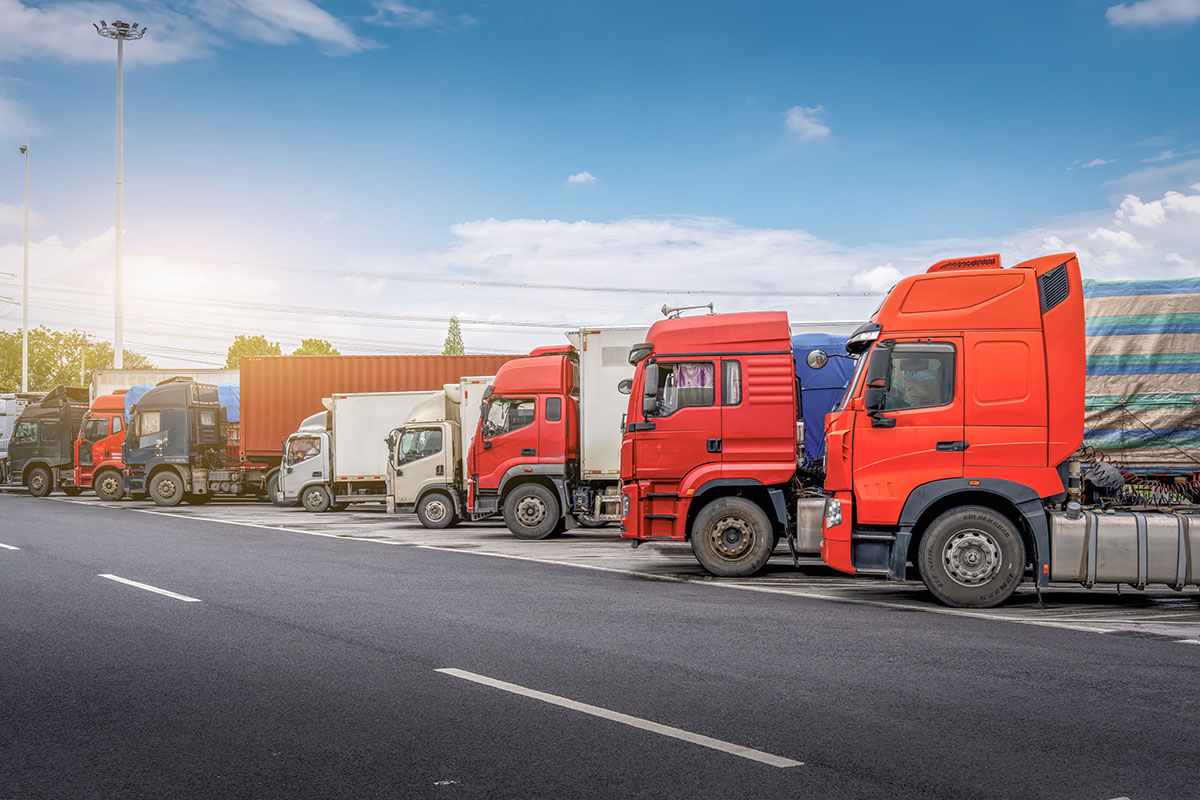
Shipments are down, yet shippers are paying far more and tender rejections sit near multi-year highs. Insurance, enforcement and tougher carrier vetting are pulling trucks off the road faster than demand is easing.
