Two new surveys show shippers bracing for higher spend next year and hedging across more carriers, modes and warehouses rather than consolidating. The cost index they will be bidding against is rising faster than at any point in four and a half years.
Key Takeaways
Bid season for 2027 is opening with an unusual mix of signals. Shippers expect to pay more next year, and most plan to use more providers to do it, not fewer. The instinct that ruled the freight recession, consolidating volume with a short list of carriers to win the lowest rate, is giving way to spreading freight across carriers, modes and warehouse sites as insurance. The problem is timing. The cost of logistics is rising faster now than at any point since early 2022, so every extra option in the network costs more to hold open.
A survey of 500 U.S. transportation, logistics and supply chain decision-makers at companies with at least $100 million in revenue, commissioned by STG Logistics and fielded September 4 to 9, found 77% expect transportation and logistics spending to increase in 2027. The research comes from a logistics provider, so its framing favors buying more services, but the individual answers are telling. 52% expect to increase the number of logistics providers they use next year. Asked about structure, 38% said they prefer fewer providers offering multiple services and 36% prefer multiple specialized providers, a near split that suggests few shippers have settled on a model.
Loyalty is thin. 48% said price increases could prompt them to shift meaningful business away from an incumbent provider, and 42% said competitive pricing could lead them to award more business to an existing partner. Price is not the only lever: 48% said they would pay a premium for faster transit times and the same share for higher on-time performance. "They're keeping their options open across providers, modes, and inventory," said Jack Holmes, CEO of STG Logistics.
The mode and footprint answers point the same way. 79% expect their truckload usage to increase in 2027, and 63% expect intermodal usage to rise, with 67% open to shifting eligible long-haul truckload freight to rail. That openness has a price floor: 49% would need transportation savings of at least 10% to make the move. On the warehouse side, 41% are considering adding capacity next year and 33% are considering repositioning inventory closer to customers.
The hedging is a response to the past twelve months, not a forecast. The 2027 Prologis Global Supply Chain Outlook, released October 28 and based on a Harris Poll survey of more than 1,800 business leaders in the U.S., UK, Germany, India, China and Mexico, found tariffs (55%) and shipping corridor conflicts (53%) were the disruptions testing supply chains most. More than half of organizations redesigned routes and network flows in the past year. Companies are regionalizing (54%), nearshoring (36%) and reshoring (35%) operations.
Customer expectations are raising the stakes at the same time. The share of organizations offering same-day or next-day delivery rose from 24% in 2019 to 58%, and 91% of leaders said customers increasingly expect delivery within a day or two. Leaders ranked speed and reliability ahead of price as competitive differentiators, which matches the STG finding that nearly half of U.S. shippers would pay more for faster or more reliable service. Two-thirds said energy costs have significantly affected their operating costs. And 75% plan significant investment in AI demand forecasting and inventory replenishment over the next two years.
All of that redesign is landing in a market that is getting more expensive month by month. The Logistics Managers' Index rose to 70.7 in October from 70.2 in September, the second-strongest reading in four years after June, Trading Economics reported on November 3. Aggregate logistics costs read 257.5, the fastest rate of expansion since March 2022. Warehousing prices rose to 80.7 from 73.5, inventory costs read 88.8 and inventory levels 66.9. Transportation capacity read 38, still well below the 50 line that separates expansion from contraction, while transportation prices eased to 88 from 92.7 but continued to climb.
Put the three data sets together and the tension is clear. Shippers want more carriers, more modes and more warehouse options in 2027, and they want faster, more reliable service. Capacity is contracting, warehousing is getting dearer at an accelerating rate, and inventory is expensive to hold. Adding a provider is cheap on paper and expensive in practice if each one gets too little volume to price it well, or if the extra inventory positions it requires sit idle. The hedge only pays when it is managed as a network, with clear rules for which freight goes where and why.
These steps keep a multi-provider strategy from turning into a more expensive version of the old one.
The shift from consolidation to diversification is a reasonable answer to a year of tariffs, corridor conflicts and capacity swings. It is also more expensive to run. The shippers that come out of 2027 bid season ahead will be the ones that treat each added carrier, mode and warehouse as a priced option with a purpose, not a reflexive hedge against the next surprise.


Report
Tariffs and shipping corridor conflicts were the disruptions that tested supply chains most this year. GEP examines why standard risk frameworks miss shocks like these and how procurement teams prepare for them before the next contract cycle locks in.
Download

Guide
More than half of organizations redesigned routes and network flows in the past year. Nulogy's framework covers stress-testing supplier networks, scenario planning and restructuring inventory, the same work a 2027 multi-provider plan needs.
Download

Guide
With 79% of shippers expecting more truckload in 2027 and many paying a premium for on-time performance, private and dedicated fleets need proof of reliability. Motive lists the platform capabilities that matter, from real-time tracking accuracy to reporting.
Download
U.S. supplier delivery times lengthened in October by the most since July 2022, and manufacturers built input stocks at the fastest rate in four months. With diesel at $6.35 a gallon, every early order now costs more to move.
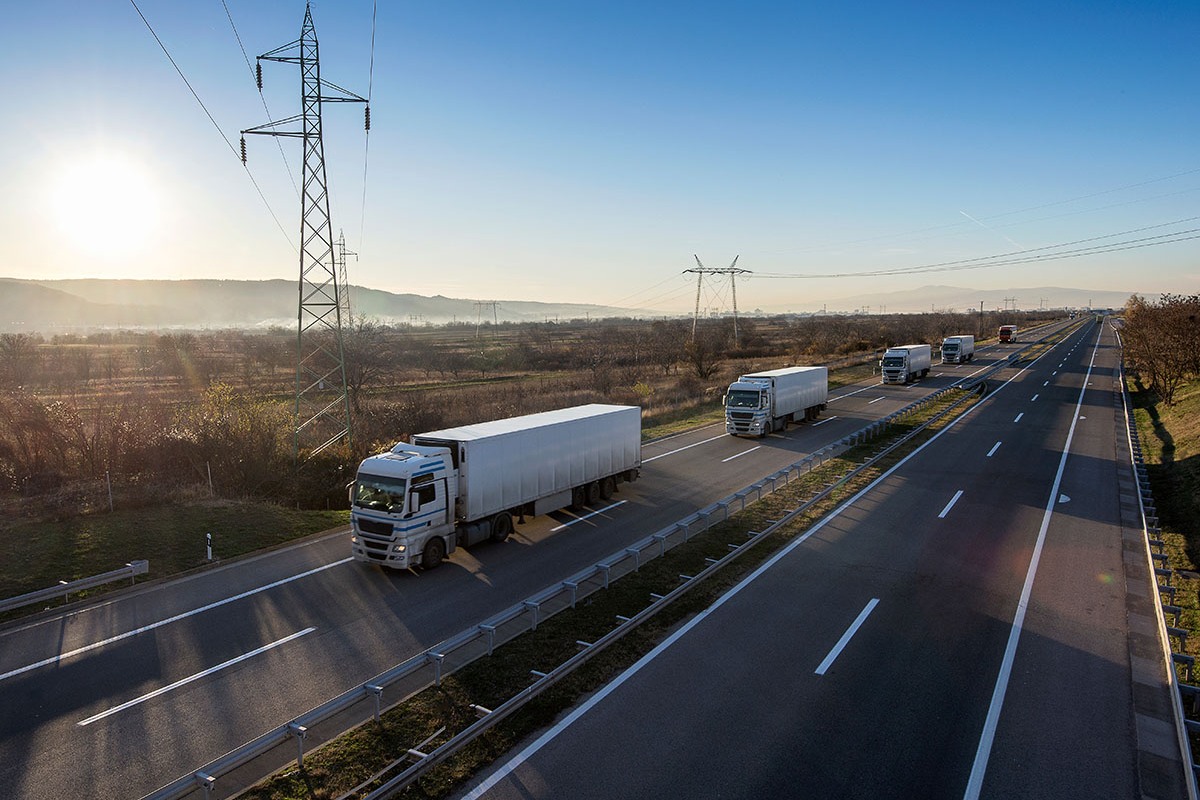
Mexican truckers protested at 38 locations in 19 states on October 26, by the government's count, before talks were agreed. It was the third major trucking protest in about a year, on the lanes that carry the largest share of U.S. trade.
