A national protest over highway violence, theft and costs reached 19 states in a day before the government agreed to talks. It was the third major stoppage in about a year, and it landed on the corridors that carry most U.S.-Mexico freight.
Key Takeaways
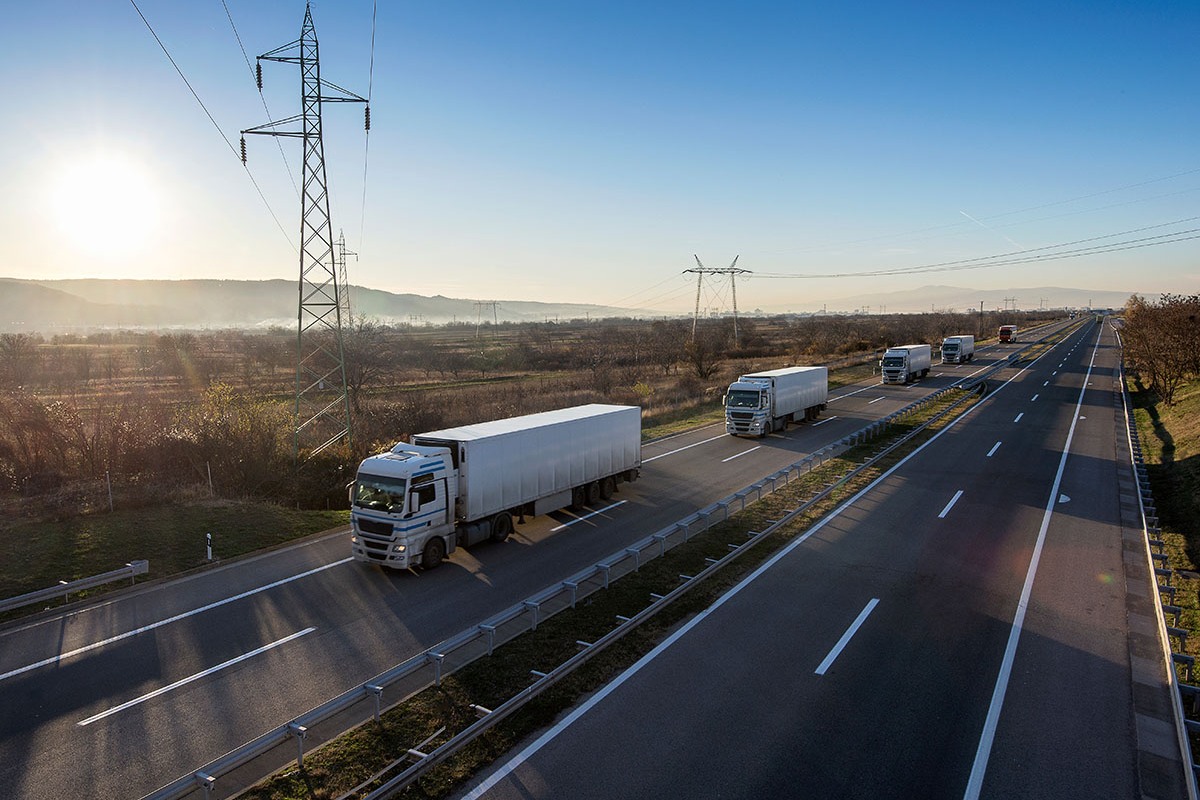
For two days this week, the busiest trade relationship the United States has ran through highways that Mexican truckers were deliberately slowing down. The national strike that began on October 26 was not about rates or capacity. It was about drivers being robbed, extorted and shot on the roads that feed the border, and about costs carriers say they can no longer absorb. Talks are now scheduled, but the people who plan cross-border networks are drawing a harder conclusion: this is no longer a one-off disruption to wait out. It is a recurring line item, and networks built around a single lane are paying it every time.
The National Chamber of Freight Transportation (CANACAR) and other trucking groups launched what they called an indefinite national strike on Monday, FreightWaves reported, with demonstrations planned in Nuevo Laredo, Reynosa, Monterrey, Tijuana and Mexico City. The grievance list was long: highway insecurity, cargo theft, extortion, violence against drivers, deteriorating roads, excessive towing fees, regulatory burdens and rising operating costs. Truckers also opposed a proposed change in Mexico's 2027 fiscal package that would narrow eligibility for a tax credit covering some highway toll expenses.
The tactics were convoys and trucks stationed along highways and near logistics facilities. By the government's count, it worked at scale. Mexico's Interior Ministry reported demonstrations at 38 locations across 19 states on Monday morning, involving 691 vehicles and 858 participants, according to a follow-up FreightWaves report. CANACAR disputed that figure and said protests extended across all 32 Mexican states. Activity was reported in Nuevo León, Tamaulipas, Veracruz, Guanajuato, Jalisco and the State of Mexico, including near Nuevo Laredo and Reynosa and on highways serving Monterrey.
On Tuesday, CANACAR president Augusto Ramos Melo announced an agreement with the Interior Ministry for four high-level working sessions covering highway security, infrastructure, tax incentives and regulation. That ended the escalation, but not necessarily the protests. The groups had not confirmed that all demonstrations had stopped, and they urged members to keep demonstrating peacefully at strategic highway locations while the negotiations were arranged.
The violence behind the strike is not new, and the headline numbers can mislead. FreightWaves' July review of Mexican cargo crime found that the national public security system opened 2,099 cargo theft investigations from January through May, down 21% from 2,653 a year earlier. Over the same period, CANACAR said at least 14 truck drivers had been killed in highway attacks, and a regional CANACAR official in Guanajuato said more than 15 drivers were killed in highway robberies in that state alone in the first half of the year. Fewer thefts, in other words, has not meant safer drivers.
That matters well beyond Mexico. CANACAR represents roughly 250,000 transportation companies, and trucking moves about 80% of Mexico's domestic and export freight, according to the same report. When those carriers stop, there is very little else in the network to pick up the load.
The exposure is concentrated. Mexico was the top U.S. trading partner in June at $89.2 billion, ahead of Canada at $67.9 billion and China at $34.7 billion, according to Census Bureau data analyzed for FreightWaves. Laredo, Texas handled $36.5 billion that month, making it the busiest U.S. trade gateway of any kind and accounting for more than a third of all U.S.-Mexico commerce. The same report showed Laredo's outbound tender rejection index at 15.19% in mid-August, against about 3.32% a year earlier, a sign that carrier capacity on the lane was already tight before anyone parked a truck in protest.
Nuevo Laredo, across the river, was among the protest sites named in advance. Any shipper running most of its Mexico volume through that one crossing was exposed on day one.
Andrew Rader, managing director at supply chain consultancy Maine Pointe, told FreightWaves this was the third major trucking protest in Mexico in about a year. At that frequency, he argued, protests become a cost of doing business, and companies that run cross-border freight through a single lane keep paying for it in expedites and idle lines. Maine Pointe CEO Joseph Esteves went further, saying the assumption that has anchored two decades of North American network design no longer holds, and that any product crossing the border in either direction needs its numbers rerun.
The working sessions may produce security commitments, and the toll credit dispute may be settled. Neither changes the pattern. These steps treat disruption on Mexican highways as a planning input rather than a surprise.
The strike will end, and the talks may deliver something. But the question Maine Pointe raised will outlast both: whether a network built on the assumption of a smooth, single-lane border still makes sense when the people driving that lane are telling the government, and every shipper who uses it, that it is not safe.


Guide
A third major trucking protest in a year turns border disruption into a planning input. Nulogy's playbook covers the supplier risk, inventory strategy and partner coordination that keep production moving when freight stops.
Download

Guide
Mexican cargo thefts are falling while attacks on drivers turn deadlier. IntelliShift's step-by-step framework for building a fleet safety program and the data behind it is where driver security protocols belong.
Download

Guide
Protests at dozens of highway locations reward fleets that can see every truck and reroute in minutes. Motive's checklist separates the tracking capabilities that matter in a disruption from vendor marketing claims.
Download
Contract manufacturers quoting reshoring projects doubled to 32% in a year, and 60% of reshoring OEMs cite logistics savings. Those savings now run through a truck market with tender rejections near 14% and diesel above $6.
As companies move production closer to home markets, freight patterns across North America are shifting faster than most carriers anticipated. We spoke with the shippers and 3PLs driving the change.
