Kearney and the MIT Mobility Initiative put the U.S. crossover near 2028, at roughly $2.60 a mile. The same report leaves open how fault splits between carrier, truck maker and software provider after a crash, and no federal statute settles it either.

Key Takeaways
For a decade, the case against driverless trucks was that the math did not work. A new model says the math closes in about two years. What it does not settle is the question every carrier, shipper and insurer will ask the first time a truck with no one in the cab is involved in a serious crash: whose policy pays, and whose name goes on the lawsuit.
The report from Kearney and the MIT Mobility Initiative, released November 5 and detailed by FreightWaves, models a driverless truck at $4.00 a mile in 2026 against $2.50 for a conventional truck. The lines cross at roughly $2.60 a mile in 2028. From there the conventional truck rises with inflation to $3.50 by 2035, while the driverless cost falls about 49% to around $2 a mile. The model is built on more than 25 interviews with autonomous developers, truck makers, carriers, brokers and investors.
The driver is the whole story. The authors put the driver at about half of a long-haul truck's cost per mile, and a fully loaded U.S. long-haul driver, including about 30% in benefits, at about $10,000 a month. That is roughly twice the European cost and four times the Middle East cost, which is why the report has the U.S. reaching parity two years before Europe and four years before the Middle East. It prices the human driver as a value pool of $1.26 a mile, and names private truckload, a market of roughly $450 billion with about $180 billion in driver costs, as one of three priority segments alongside for-hire truckload and LTL.
Those numbers land on an industry already squeezed. The American Transportation Research Institute put the average cost of running a truck at a record $2.336 a mile in 2025, up 3.4% from 2024, while truckload and refrigerated carriers ran operating margins below 1.0%, DC Velocity reported. Driver wages averaged 81.8 cents a mile with benefits adding another 21 cents, according to The Trucker's breakdown of the ATRI data.
A cost-per-mile model can price fuel, hardware, remote operators and research spending. It cannot yet price fault. The Kearney report leaves open how liability is split among the carrier, the truck maker and the virtual-driver provider after an incident, and it does not say how a virtual driver would be certified. Its four business models (OEM-led platforms, purpose-built vehicles, autonomous carriers and virtual-driver-only providers) each put a different party closest to the wheel, and the authors frame the open question as "which business model captures the most value when the economics close."
The law has not answered it either. A May analysis by Greenberg Traurig notes that Congress has not enacted a dedicated federal liability statute for self-driving vehicles, and that NHTSA mandates crash reporting and investigates incidents but leaves fault allocation to courts and states. The SELF DRIVE Act of 2026 advanced through a House subcommittee on a 12-11 vote, but it focuses on safety certification and does not create new liability rules. In fully driverless deployments, the firm writes, the OEM, the automated driving system provider or the remote operator could be at fault, often under product-liability theories.
Parity on cost per mile is not parity on cost of risk. Until someone owns the crash, the cheapest mile is also the least priced. Logistics Focus analysis
States are filling gaps unevenly. California's AB 1777, effective July 1, lets officers issue notices of noncompliance directly to manufacturers or operators for violations committed while the system is engaged, and California, Nevada and Arizona require more than $5 million in coverage for driverless testing. Texas, Arizona, Florida and Georgia permit fully driverless operation, but cross-border and many interstate routes still require a human driver.
Insurance is already a moving cost for human-driven fleets. ATRI put premiums at 10.6 cents a mile in 2025, up 3.9% from 2024 and 23.9% from 2021, and the study cautions that premiums "should be understood as one key component of a carrier's total cost of risk." Every fleet competing against a $2.60 driverless mile will be judged on that total, not on the premium alone, and the evidence a fleet can produce after an incident is a large part of it.
The timeline is also less certain than the headline. The model assumes 40,000 autonomous trucks by 2035 and a remote-operator ratio improving from one per 10 trucks to one per 20. At only 10,000 trucks, U.S. parity could slip to as late as 2032. Developer numbers point the same direction but are company-reported: Aurora's Fort Worth-to-Phoenix case study put its virtual driver at $1.84 a mile against $1.99 for a human driver, after more than 500,000 driverless miles on public roads.
The economics of driverless freight may close sooner than most carriers planned for. The liability will not close on its own. Fleets and shippers that settle who owns the crash before they sign a pilot will be the ones that capture the savings the cost curve promises.


Guide
Choosing between four autonomy business models is a vendor evaluation before it is a technology bet. GEP's framework sets out the capability, integration and accountability questions every AI vendor should be able to answer before you sign.
Download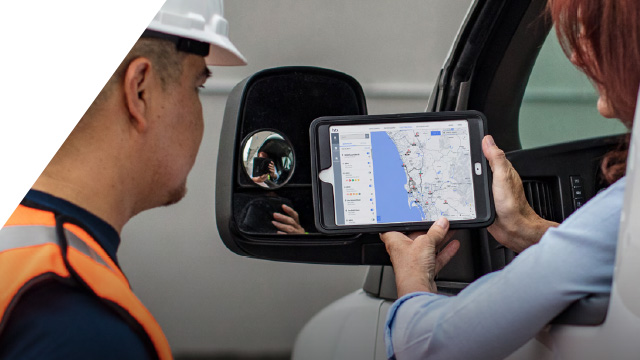

Guide
With fault left to courts and states, the record a fleet keeps decides how a crash is judged. Lytx covers the performance measures, video telematics and data infrastructure that turn operations into evidence rather than recollection.
Download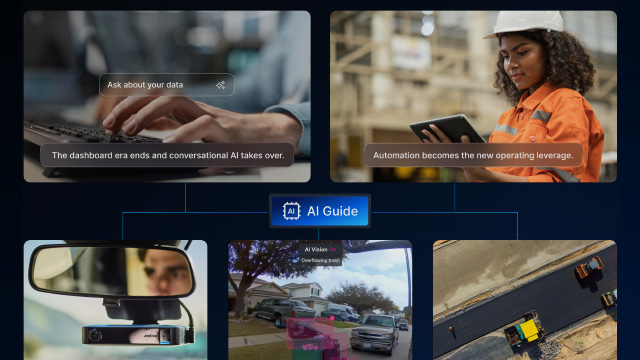

Guide
Fleets that will compete with a $2.60 driverless mile need AI working in today's human-driven operation first. Motive covers predictive maintenance, driver safety scoring, route optimization and the readiness factors that decide whether AI delivers.
Download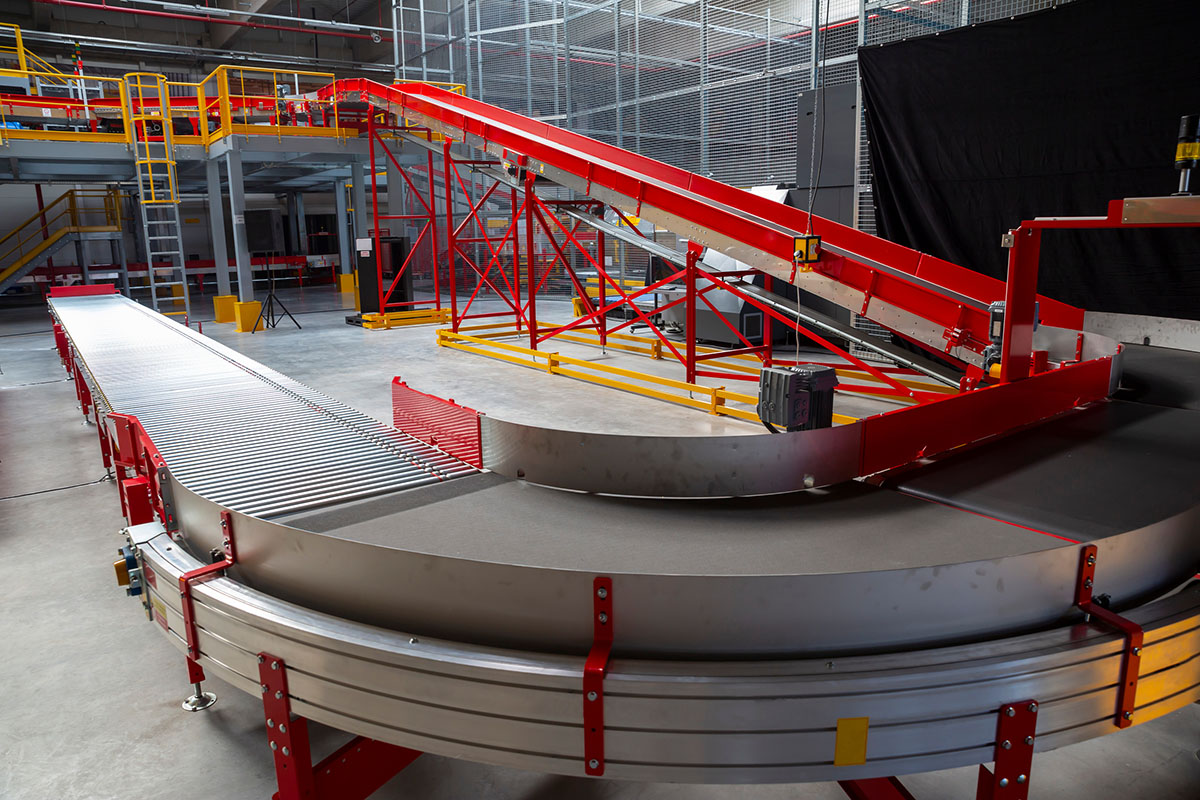
91% of surveyed distribution and logistics leaders approved automation their teams were not ready to maintain. EY finds 94% of supply chains are transforming, but only 9% have embedded the change in daily operations.
A telematics report covering 245 fleets finds construction fleets monitor 92% of their vehicles yet log more than five times the severe speeding of transportation and warehousing fleets. Only 26% of fleets use the data to assign driver training.
