ATRI's survey of more than 100 carriers finds trucking has put telematics to work on safety, while 48% of fleets still keep that data away from the shop. With brake defects topping roadside out-of-service lists and diesel near $6, the missing link is now a cost line.
Key Takeaways
Most trucking fleets already know where their trucks are, how hard their drivers brake and how fast they take a curve. Far fewer let that same data tell the shop what is about to fail. New research from the American Transportation Research Institute finds that almost half of carriers keep telematics and maintenance in separate systems, which means the sensor that spots an engine problem on Tuesday may not reach the technician who could fix it before Friday's load.
ATRI's study, From Data to Decisions: Trucking's Use of Telematics Data to Improve Performance, surveyed more than 100 motor carriers and about half a dozen technology providers on how they turn telematics into decisions. As Trucking Dive reported on October 27, the headline gap is integration: 48% of fleets do not connect telematics with their maintenance management software, and nearly one in three do not connect it to their transportation management system. Disconnection is more common among smaller fleets, such as those running 21 to 320 power units, which often fall back on manual methods.
ATRI's own summary of the pattern is blunt: "Trucking has broadly adopted telematics KPIs for safety management." What has not followed is the use of the same data for maintenance and operations. The measures ATRI flags as underused are the ones a shop would care about most: missed or skipped preventive maintenance, engine health, defect and fault diagnostics, rollover risk indicators and cost per mile. The research also cites financial constraints as a limit on how far fleets take telematics, and warns that rising operating costs could push carriers to defer maintenance and equipment purchases.
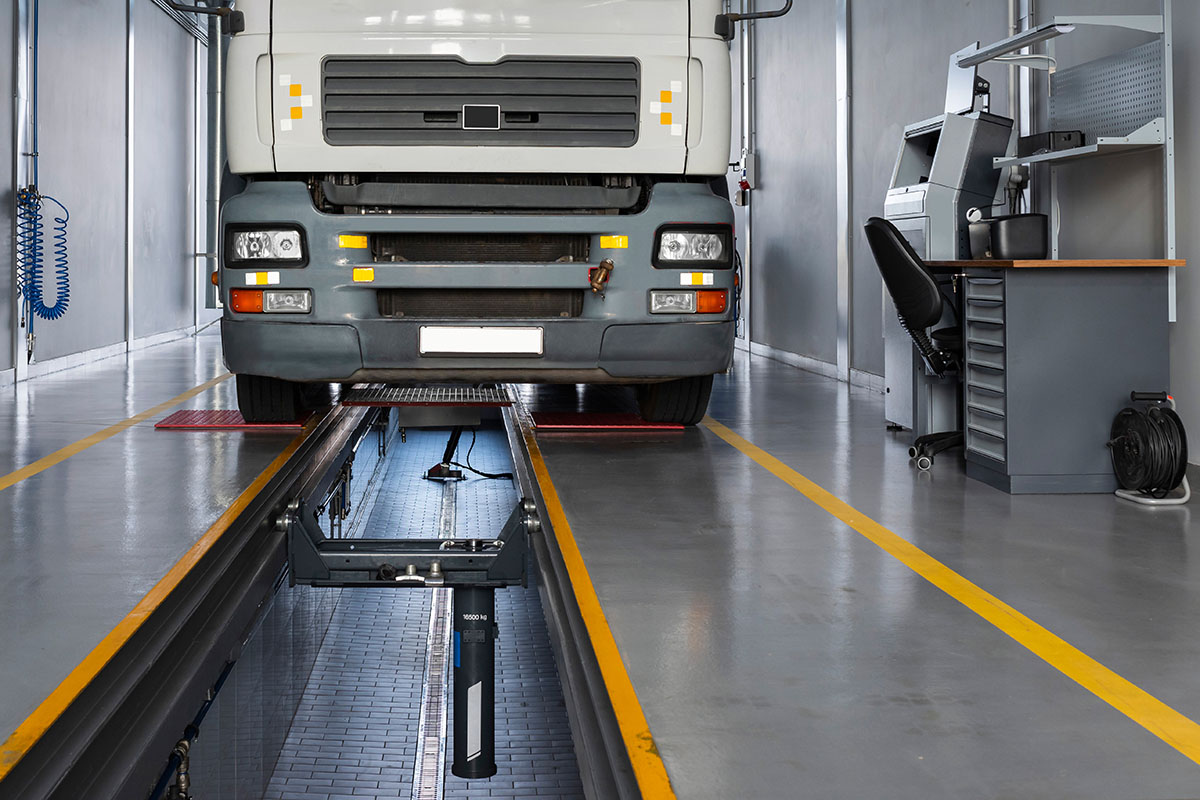
The fleets that have closed the gap show what the connection looks like in practice. At Chief Carriers in Grand Island, Nebraska, telematics, maintenance software and the TMS are automated to communicate with each other, and maintenance manager James Sughroue said telematics can flag maintenance issues for his team. He is already looking further, toward an AI system that could pull together emails, TMS load data, driver telematics and maintenance records to surface new findings such as added preventive maintenance, though he said it is uncertain whether that will happen.
The cost of keeping maintenance blind is visible in enforcement data. During CVSA's three-day International Roadcheck in May, inspectors carried out 54,575 inspections across North America and placed 10,350 vehicles, about 19%, out of service, FleetOwner reported. Brake systems led the list of vehicle out-of-service violations with 3,379, or 24.3% of the 13,924 recorded, followed by tires with 2,914. Counting defective brakes as well, brake-related violations totaled 5,451, roughly 39% of all vehicle out-of-service violations.
A fault code that never reaches the shop is not a data point. It is a roadside inspection waiting to happen. Logistics Focus analysis
Fuel makes the same argument from the other side of the ledger. Writing in FleetOwner, Michael Roeth, executive director of the North American Council for Freight Efficiency, pointed to NACFE's finding that well-maintained trucks could deliver a 5% fuel economy improvement, and noted that with diesel hovering around $6 a gallon, even half a percent pays off. Citing the ATRI report, he said savvy fleets are going beyond location data and integrating driver vehicle inspection reports with telematics. "Safety, maintenance, and efficiency are all tied together," he wrote.
The integration gap is not a shortage of hardware. In a SambaSafety survey covered by Trucking Dive, 70% of fleets said they use two or more devices to manage safety, 39% expected to add more within 12 months, and only 6% used none. Yet 66% named interpreting or acting on data as a top telematics challenge. Ashley Newbill, vice president of product marketing at SambaSafety, said the volume "can make it very difficult for a safety or risk leader to determine where they should focus their efforts."
That is the trap ATRI's findings describe. Each new device adds a feed that lives in its own dashboard, usually owned by safety. Maintenance keeps its own work orders and inspection history, and operations runs the TMS. Without a connection between them, the fleet pays for three views of the same truck and still finds out about a worn brake chamber from an inspector. Smaller carriers, with the least IT capacity to stitch systems together, are the most likely to be in that position.
Trucking spent the last decade proving telematics can change driver behavior. The next gain sits in the systems that already exist but do not talk to each other. Fleets that send the same data to the shop and the dispatch desk will spend less on fuel at $6 diesel and see fewer trucks sidelined at the next roadside inspection, without adding a single new device.

Report
Most fleets justify telematics on safety alone and never count what it saves in the shop or at the pump. Lytx sets out the cost reductions video telematics delivers across insurance, fuel, maintenance and accident-related expenses.
Download

Guide
ATRI finds fleets use telematics for safety but rarely for operations, the gap this article traces. IntelliShift shows how operators use data and operational visibility to raise productivity without adding vehicles or headcount.
Download

Guide
The AI system Chief Carriers is weighing would read emails, load data, telematics and maintenance records together. GEP explains how organizations move from isolated automation to agentic AI that coordinates decisions across functions.
Download
91% of surveyed distribution and logistics leaders approved automation their teams were not ready to maintain. EY finds 94% of supply chains are transforming, but only 9% have embedded the change in daily operations.
A telematics report covering 245 fleets finds construction fleets monitor 92% of their vehicles yet log more than five times the severe speeding of transportation and warehousing fleets. Only 26% of fleets use the data to assign driver training.
