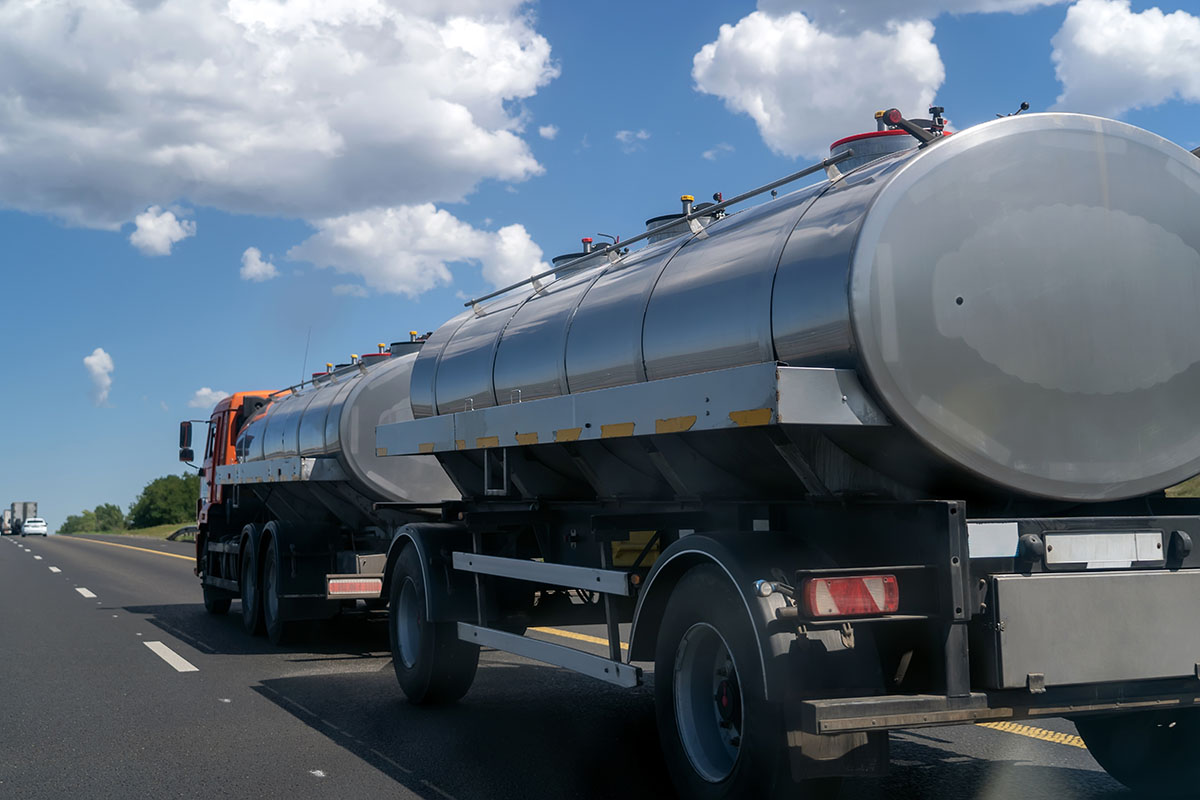
A New Mexico jury has put a $47 million price on a tanker crash that the defense first valued at $100,000. The allegation at its center was not a dramatic failure but an everyday one: a truck moving too fast for the conditions, just as winter driving season begins.
Key Takeaways
Most fleet safety programs are built to stop the obvious failures: impairment, hours violations, a driver who should never have been hired. The verdict a New Mexico jury returned this month turned on something far more ordinary. A tanker on a two-lane highway, allegedly moving too fast for the weather, collided head-on with a pickup. The defense opened negotiations at $100,000. The jury came back at $47 million. For logistics leaders heading into the season of rain, ice and short daylight, the distance between those two numbers is the real story.
According to FreightWaves, the jury in the First Judicial District Court in Tierra Amarilla awarded $47 million to Austin Drewry Jackson and his mother, Crystal Gayle Drewry, in their suit against Pilot Thomas Logistics LLC and Maxum Petroleum Operating Company. The crash happened in November 2022 near Carlsbad. Jackson, then 21 and a Louisiana National Guard veteran working on an oil rig, suffered severe traumatic brain injuries and extensive damage to his spine, bones and internal organs. He had planned to go home for Thanksgiving.
The plaintiffs' firm, Tawney, Acosta & Chaparro, said the tanker driver was traveling at excessive speed for the weather and did not notice or react to the pickup in time, and that nearly four years later Jackson remains bedridden and depends on others for daily care. Partner James Tawney said the first pretrial offer of $100,000 "did not come close to acknowledging the harm Austin suffered." The special verdict form was filed October 13.
Two procedural details matter for fleet operators. On October 7 the court dismissed, with prejudice, the claims against the driver in his individual capacity, and the case went forward against the corporate defendants alone. And the outcome is not final: the defendants filed motions on October 9 challenging the punitive damages, direct negligence, proximate cause and loss of consortium claims, and as of October 19 the docket showed no final judgment or notice of appeal. The public record does not yet show how the award divides between compensatory and punitive damages.
Speed for conditions sounds like a minor charge next to impairment or fatigue, but juries do not treat it that way. Research from the American Transportation Research Institute, reported by FreightWaves when it was released in December 2025, measured how specific pre-crash negligence allegations change expected total awards. A speeding allegation raised them by 56.1%. Improper hiring or onboarding raised them by 272.3%, gross negligence by 193.4%, and substance abuse by 340.7%. Each additional type of negligent behavior alleged added about 86.5%. ATRI's conclusion was blunt: cases with fewer types of negligence are likely to be more favorable for defendants.
That compounding effect is what turns a single crash into a corporate case. Once a plaintiff can argue that the company knew or should have known how its drivers handled bad weather, the question moves from one driver's judgment to the fleet's policies, training and supervision. That is the same shift visible in the July verdict against Mesilla Valley Transportation, where an El Paso jury awarded $104 million after finding that a driver and company trainer fell asleep and struck a parked box truck displaying emergency flashers, killing his co-driver. "Professional truck drivers and trucking companies have a responsibility to keep fatigued drivers off the road," said plaintiffs' attorney Alejandro Acosta III. MVT said it was evaluating its appellate options.
The defense valued the case at $100,000 and the jury valued it at $47 million. A safety program is only as good as the risk it can see before a jury prices it. Logistics Focus analysis
Individual verdicts get the headlines, but the aggregate is what reaches every carrier and shipper. A FreightWaves SONAR Sitrep citing Marathon Strategies data counted 135 nuclear verdicts across all industries in 2024, totaling $31.3 billion, with the median nuclear verdict rising to $51 million from $21 million in 2020. Citing ATRI, it put insurance premiums at a record $0.102 per mile in 2024 and said commercial vehicle liability premiums rose 18.6% from 2021 to 2024, while per-mile liability losses rose 33.1% even as crash rates fell 2.6%. A third of fleets have had to buy additional excess layers just to keep their 2021 coverage levels.
The gap between falling crash rates and rising losses is the point. Fleets are, on average, crashing less, yet each crash that reaches a courtroom costs more, and the cost depends heavily on what a plaintiff can prove about the company's conduct beforehand. That makes the pretrial valuation of risk a management discipline, not a legal afterthought. An organization that opens at $100,000 on a case a jury later values at $47 million has not just misjudged a lawsuit. It has misjudged what its own operating record will look like when someone else tells the story.
The New Mexico award may still be reduced on motion or appeal, and the defendants have not had their final word. But the lesson for logistics leaders does not depend on the final figure. The allegation that drove it was one of the most common judgments a driver makes, repeated thousands of times a day across every fleet in winter. The companies that measure and manage that judgment will have a defensible record when a case comes. The rest will find out what their risk was worth from a jury.


Guide
When a jury weighs speed for the weather, it is weighing what drivers, dispatchers and managers treated as normal. IntelliShift explains how fleets build a shared understanding of risk that goes beyond rules and monitoring.
Download

Guide
Speed for conditions stays a judgment call until the data shows a pattern. Lytx sets out how fleet leaders move from gut feel to performance measurement and video telematics that reveal where risk is building before a crash does.
Download

Report
An opening offer of $100,000 against a $47 million verdict is a risk valuation that missed by a factor of 470. GEP examines the blind spots supply chain leaders consistently underestimate and how resilient organizations prepare for them.
Download
Scarce drivers, nuclear verdicts and a unanimous Supreme Court ruling on broker liability have changed the safety math. Fleets like Dot Foods are scoring, coaching and paying for safe driving instead of hiring their way out of risk.

Fuel prices topped ATRI's survey of nearly 3,100 trucking stakeholders, ending the economy's three-year run at No. 1. Yet only 73% of carriers in ATRI's telematics research use cost per mile, the metric they rated most important.
