A CalMatters review of more than 130 commercial licensees charged with vehicular manslaughter found nearly half still held a valid Class A or B license. For fleets, a valid CDL is no longer proof of a safe driver.

Key Takeaways
Every carrier hiring a driver relies on one assumption: if the state says a commercial license is valid, the person holding it has not been judged too dangerous to drive. A CalMatters investigation published on October 19 shows how badly that assumption can fail. In California, drivers who killed people with their trucks kept their licenses for years, renewed them, and in some cases picked up new tickets behind the wheel of a big rig. The state had the power to act and routinely did not.
Reporters Lauren Hepler and Robert Lewis reviewed court filings and DMV records for more than 130 commercial licensees charged with vehicular manslaughter between 2019 and early 2024. Nearly half still held a valid Class A or Class B license as of late May. A dozen had been ticketed for unsafe driving in commercial vehicles after a crash in which someone died. About 4,000 people were killed in large-truck crashes in California from 2015 through 2024, according to the federal data the investigation cites.
The cases are specific. In July 2021, Baljit Singh's semi crossed a median in Kern County and killed a 26-year-old motorcyclist. The California Highway Patrol alleged fatigue after more than 12 hours of driving, found his log book pages torn up, and recommended a manslaughter charge. The DMV knew about the crash and had authority to suspend his license. It did not. Eleven months later his truck hit a family's SUV outside Fresno, killing Jenny Chow. His license was taken only after he was convicted in 2024. Her husband, Loren Chow, told CalMatters the death "was completely avoidable."
Another driver, convicted of manslaughter after his truck killed a tow operator on Interstate 10 in 2018, received four tickets for unsafe commercial driving and had his trucking license renewed in March. The DMV disqualified him for one year only after CalMatters asked about the case in July.
"One thing goes wrong, you're gonna kill somebody." Joe Rajkovacz, Western States Trucking Association
State law lets the California DMV investigate drivers involved in fatal and serious-injury crashes and suspend them with or without a conviction. In practice, the investigation found, the agency waits for courts and law enforcement to report outcomes, and criminal cases can take years. Even when a conviction did arrive, the record was often understated: vehicular manslaughter should carry three points for a truck driver, but in almost every DMV record reviewed it was entered as two, the penalty for a regular driver. A DMV spokesperson said the agency depends on timely reporting and has recently updated how it handles fatal crashes and manslaughter convictions.
That matters to every fleet because the motor vehicle record is the main window carriers have into a driver's history. Under 49 CFR 391.25, a carrier must request each driver's record from every state that licensed them at least once every 12 months, review it for violations and accidents, and give "great weight" to serious offenses such as speeding and reckless driving. The rule assumes the state record is complete. When a fatal crash sits unadjudicated for years, or a conviction is logged at the wrong point value, a carrier can run a compliant review and still see a record that looks routine.
Once a year is also a long interval. The Lytx 2026 Road Safety Report, built on more than 341 billion miles of driving data, found that collision rates rose 4% in 2025 even as severe crashes per mile fell 4%, while low-severity incidents climbed 16%. Those smaller events rarely reach a state record at all, but they are where risky habits show up first. A driver can accumulate months of warning signs between two clean annual reviews.
California's DMV says it is processing previously unreviewed cases, and it acted against a dozen drivers shortly after CalMatters sent it a list. Fleets cannot plan around a state catching up. The carriers best placed to avoid hiring or keeping a dangerous driver are building their own picture, using these steps:
The CalMatters findings are about one state's licensing agency, but the lesson for carriers is wider. A commercial license confirms that a driver has not yet been removed from the road. It does not confirm that the driver should be on it, and the carriers who treat that gap as their own responsibility are the ones least likely to find out the hard way.
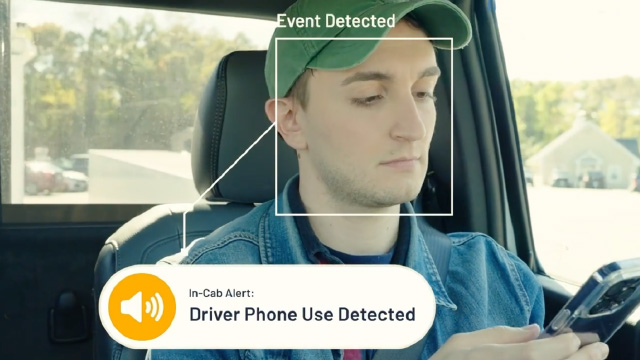

Guide
The California cases turned on information that sat in one system and never reached another. This guide shows how fleets break down the same silos between safety, compliance, maintenance and operations inside their own business.
Download

Guide
A license check runs once a year, but risky driving happens every shift. This analysis sets out the financial case for video telematics across insurance, maintenance and accident-related costs, the lines a single serious crash can upend.
Download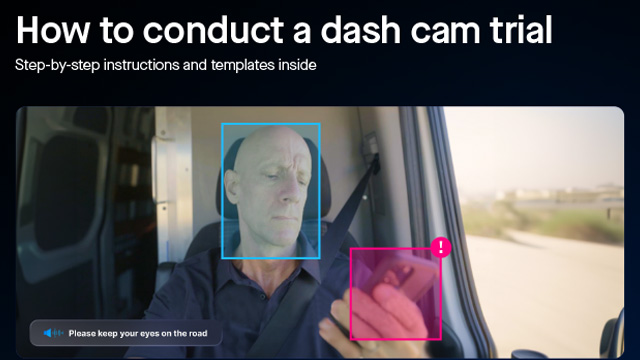

Guide
For a carrier that can no longer treat a valid CDL as proof of a safe driver, in-cab video is the most direct view of behavior between record checks. This guide covers how to pilot it, from driver communication to the metrics that decide a full rollout.
Download
Five months after the Supreme Court's Montgomery ruling, brokers are vetting carriers' safety processes, not just their cameras. With about 90% of carriers unrated by FMCSA, the proof now has to come from the fleet itself.
Truck parking dropped out of ATRI's Top 10 industry issues for the first time since 2012, even as drivers ranked it second. USDOT's new $200 million adds about 2,400 spaces against a shortfall of one space for every 11 trucks.
