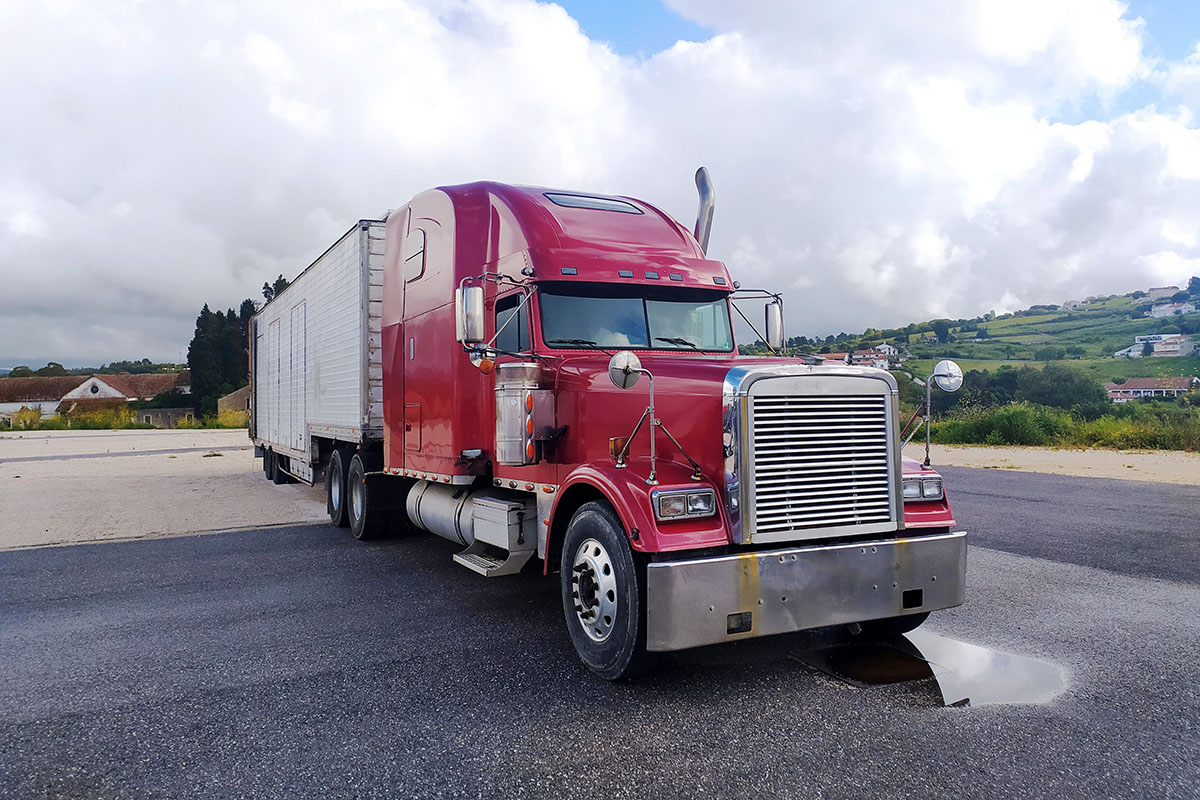
Truck parking dropped out of ATRI's Top 10 industry issues for the first time since 2012, even as drivers ranked it second. USDOT's new $200 million adds about 2,400 spaces against a shortfall of one space for every 11 trucks.
Key Takeaways
In the same week that Washington put $200 million behind new truck parking, the industry's own ranking of its biggest problems pushed parking out of the Top 10 for the first time in more than a decade. The two facts point in opposite directions, and they come from different groups. Fleet executives, squeezed by diesel and lawsuits, have moved parking down their list. The drivers who spend the last hour of every shift hunting for a legal space have not.
The American Transportation Research Institute released its 2026 Top Industry Issues report on October 18, built from nearly 3,100 responses. Fuel prices took the top spot, and the economy fell to sixth after three years at No. 1. Motor carriers ranked lawsuit abuse reform, fuel prices and the driver shortage as their top three concerns. Truck drivers ranked fuel prices, truck parking and driver compensation as theirs.
That split is what moved parking. According to TheTrucker.com, parking slid to No. 11 overall from fourth in 2025, the first time it has missed the Top 10 since 2012, even though it remained the No. 2 concern for professional drivers. Drivers made up 25.8% of respondents, so their priorities carry less weight in the combined list than those of the carrier executives and other stakeholders who make up the rest. Jason Damron told TheTrucker.com that "there's a lot of dangerous parking out there" and that "parking at night is almost impossible."
The ranking measures attention, not capacity. Nothing about the physical shortage changed between 2025 and 2026. What changed is that diesel above $6.50 a gallon and lawsuit exposure crowded the executive agenda, leaving parking as a problem drivers feel every night and carriers rank behind cash flow and legal exposure.
On October 14, Transportation Secretary Sean Duffy announced $200 million through the INFRA grant program for 14 projects in 12 states. Land Line tallied the listed projects at 2,403 new spaces, against a national ratio of about one truck parking space for every 11 trucks on the road. The largest by capacity is Tennessee's I-40/I-24 freight corridor network at 500 spaces for $23.95 million. The largest single award, $27.74 million, goes to a new Minnesota rest area near Fergus Falls with 63 truck spaces. Across the program, the money works out to roughly $83,000 per space.
Drivers already pay for the gap with their time. Transport Topics reported that drivers can lose 56 minutes a day and $5,600 a year searching for parking, while the American Trucking Associations cited an ATRI analysis putting the lost wages at $6,813 a year, and a USDOT study finding that 98% of drivers regularly have trouble finding safe parking. "Truck parking is not simply a matter of convenience," said Henry Hanscom, ATA's chief advocacy and public affairs officer, calling it "a critical safety and supply chain issue." Duffy put it more simply: drivers "shouldn't have to spend over an hour looking for a safe place to rest at the end of the day."
More money may follow. ATA says Congress approved $200 million for truck parking in the fiscal 2026 package, the House Appropriations Committee has advanced another $200 million for fiscal 2027, and the Truck Parking Safety Improvement Act would provide $755 million in competitive grants. None of the newly funded spaces exist yet; each project still has to clear planning and construction.
"Truck parking is not simply a matter of convenience." Henry Hanscom, American Trucking Associations
Parking is usually framed as a highway infrastructure issue, but some of the demand is created at the dock. Two of the 14 awards sit at ports. The Port of Wilmington's $6 million project, Port City Daily reported, pairs about 140 truck spaces with about 50 container staging positions for early arrivals and appointment-based terminal deliveries. That is a facility built around the gap between when a truck shows up and when the freight is ready for it.
That gap is old and well documented. In earlier ATRI detention research covering 2014 to 2018, one in five drivers said preloaded trucks were not ready by their appointment time, and delays of six hours or more rose 27.4% over the period. Every hour a driver waits at a shipper is an hour of service clock spent off the road, which pushes the end of the shift later into the evening, exactly when ATRI's respondents say parking is hardest to find.
New public parking will take years to build. In the meantime, the operators handling the shortage best are focusing on these steps:
The Top 10 list says the industry has bigger worries this year. The drivers who rank parking second, and the one space available for every 11 trucks, say the problem has not gone anywhere. The fleets and shippers that plan around it now will not have to wait for 2,400 new spaces to arrive.


Guide
Drivers who cannot find a legal space end up on ramps and shoulders, or pushing on tired to the next exit. This guide lays out a framework for a safety program that measures that kind of risk and keeps incident rates and insurance costs in check.
Download

Guide
Fifty-six minutes a day spent hunting for parking is lost productivity that rarely shows up on a dispatch board. These six field-tested strategies cover the efficiency, safety and cost levers fleet managers use to win that time back.
Download

Guide
Loads that are not ready at the appointment time push drivers into the evening parking scramble. This guide makes the case that well-coordinated networks of brand owners and partners beat fragmented ones on cost, speed and service reliability.
Download
The 2027 NOx pre-buy is over, and September truck orders split on the year as fleets wait on a final EPA rule. Carriers that did not buy are running aging equipment whose repair bills are climbing faster than almost any other cost.

Five months after the Supreme Court's Montgomery ruling, brokers are vetting carriers' safety processes, not just their cameras. With about 90% of carriers unrated by FMCSA, the proof now has to come from the fleet itself.
