Holiday sales are on track to top $1 trillion, but inflation is doing most of the lifting. Retailers that bought early to beat tariff changes are now carrying stock into a season where shoppers are buying fewer items.
Key Takeaways
On paper, this holiday season is a milestone. Sales are forecast to cross $1 trillion for the first time. Underneath that number is a less comfortable picture for anyone who moves or stores retail goods. Retailers bought early and heavily to protect themselves from tariff timing, and a large share of them are now holding that stock longer than they planned. At the same time, the growth in sales dollars is mostly price, not volume. The goods are already in the network, and fewer of them may leave it at full price than the spring plans assumed.
The clearest evidence comes from two surveys by ERP provider DOSS, reported by SupplyChainBrain on October 6. Among 504 retail decision-makers, 25% said they accelerated purchases to lock in prices ahead of planned tariff changes, and 45% said they held excess inventory longer than planned. "Retailers are hedging," DOSS CEO Wiley Jones told the publication, describing the tradeoff between the cost of overstock and the risk of running out if tariffs rise before a reorder lands.
The second DOSS survey, of 661 retail inventory management professionals, shows how shaky the ground under those buys was. More than half said they sometimes use demand forecasts they know are unreliable. Nearly a quarter said they have overbought to avoid stockouts, and 40% believe more than 10% of their inventory is at risk of becoming unsellable at any given time.
Marcus Shen, CEO of liquidation marketplace B-Stock, put the planning problem plainly: "All of these decisions now have to be made months and quarters in advance." The further out a forecast reaches, the less it can be trusted, and tariff timing pushed buying decisions further out than usual. Excess stock is not free to keep. It ties up cash and warehouse space, carries ongoing storage and handling costs, and seasonal goods in particular can end in deeper discounts or write-downs.
The demand side explains why the overhang matters. Bain & Company's holiday forecast, released September 3, projects U.S. holiday retail sales growing 4.5% year over year, ahead of the 3.5% recorded in 2025, and passing $1 trillion for the first time. Bain also says more than half of that nominal growth will come from higher inflation. Nonstore sales are expected to grow 9% and generate about 60% of overall growth, while in-store sales, roughly 70% of the season, are forecast to rise 2.5%.
Several categories are not expected to grow at all. Bain forecasts furniture and home furnishings, electronics and appliances, and food and beverage to stay flat. Aaron Cheris, global head of Bain's Retail practice, said retailers will need to focus on "striking the right balance when it comes to price and promotions," which is another way of saying margin will be spent to move goods.
Unit data already shows the gap. SupplyChainBrain cites Circana figures showing August U.S. retail sales rose nearly 1% while unit demand fell 1.7%. An AlixPartners survey of 15,000 U.S. consumers expects holiday sales to rise 4% to 7%, yet finds shoppers spending less per unit across apparel, toys and electronics. "They just may not buy at the pace or at the volumes that we may have expected," Shen said.
Whatever the final sell-through, the boxes are landing. FreightWaves reports that the Port of Long Beach handled 997,177 TEUs in September, its busiest month in more than a century and about 25% above September 2025. Loaded imports reached 509,390 TEUs, up 31.3%. Port CEO Noel Hacegaba attributed part of the shift to rising diesel costs, Panama Canal restrictions and shippers anticipating a possible U.S.-China trade agreement.
Once those containers are unloaded, the cost of guessing wrong shifts to the domestic network. Storage was already tight: the September Logistics Managers' Index showed warehouse capacity contracting at its fastest pace in four years, with stock piling up upstream. Moving surplus between distribution centers to chase pockets of demand is not cheap either. The national average retail diesel price was $6.179 a gallon for the week of October 12, according to FreightWaves' reading of Energy Department data, the third straight weekly decline but still a heavy line item on every repositioning load.
That combination is what makes this season unusual. In a normal overstock year, the main risk is markdowns in January. This year, the same inventory has also been costlier to import, costlier to store and costlier to move, so every week it sits adds to a bill that the sale price may not cover.
The holiday outcome is not settled, and strong online growth may clear more stock than the unit data suggests. But the surveys show many retailers and their suppliers are already carrying more than they intended. These steps target the costs that are still controllable.
The tariff hedge was a reasonable response to an unpredictable policy calendar. The problem is that it was placed against forecasts many planners did not trust, and it is now meeting shoppers who are spending more dollars on fewer things. The retailers and suppliers that come out of January in good shape will be the ones that start treating that inventory as a cost to manage this month, not a problem to price down after the holidays.


Report
More than half of retail inventory professionals admit to buying on forecasts they know are unreliable. Nulogy looks at how supply chain organizations build data and analytics capabilities that hold up when demand turns.
Download

Guide
A quarter of retailers bought early to beat tariff changes, and many are now paying to hold that stock. GEP shows how procurement teams use analytics and closer supplier relationships to time and size buys with more precision.
Download

Report
With diesel above $6 a gallon, every load of surplus shuttled between distribution centers adds cost. Motive's analysis of how fleets measure and improve return on fuel spend applies directly to private fleets repositioning stock.
Download
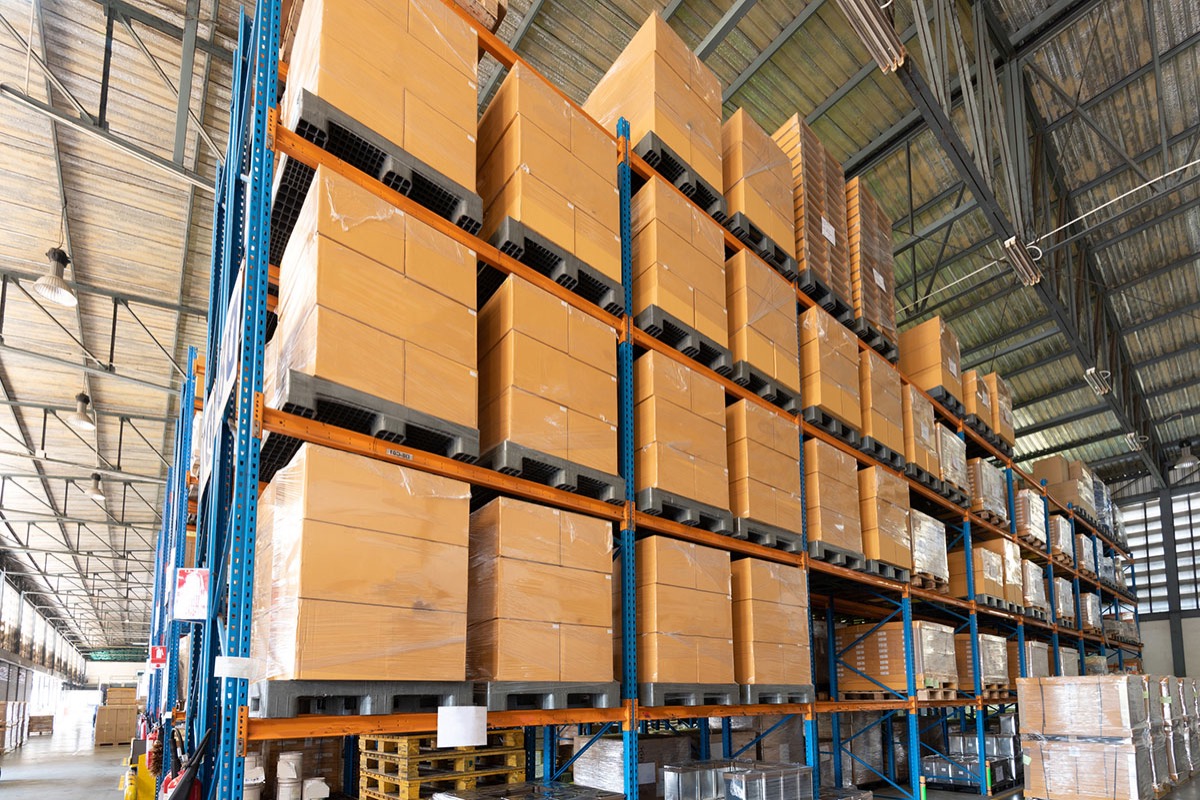
Warehousing capacity fell 14.2 points to 39.3 in September, its fastest contraction since March 2022. Upstream firms holding holiday stock are absorbing most of the squeeze, and smaller firms are losing room fastest.
Aggregate logistics costs averaged 241.9 from March through August, above the 240 level that has historically preceded supply-driven inflation. Inventory growth is slowing, but holding it costs more than ever.
