A new generation of AI tools promises to cut transportation costs by 15 to 30 percent through dynamic routing. We talked to the logistics teams who have been testing them for 18 months, and the results are more nuanced than the vendors admit.

Key Takeaways
When a regional grocery distributor in the Mid-Atlantic piloted an AI-powered route optimization platform across 47 delivery routes in the first quarter of 2025, the results looked spectacular on paper. Fuel costs dropped 18 percent in the first 90 days. On-time delivery rates climbed from 91 to 96 percent. The vendor held up the deployment as a flagship case study. What the case study did not mention was that the distributor spent four months before go-live cleaning 200,000 address records, re-mapping 1,400 customer delivery windows, and building a custom API bridge to connect the platform to a decade-old TMS that the vendor had never integrated with before. That preparatory work cost roughly $340,000 in internal labor and consultant fees, a figure that does not appear in the vendor's published ROI calculations.
"The platform works exactly as advertised once everything is clean and connected," said the company's vice president of transportation operations. "But nobody tells you that getting to that point is a significant project in its own right."
Most transportation management systems built before 2018 rely on rules-based routing engines. A dispatcher enters parameters: maximum drive time, vehicle capacity, delivery windows, preferred carrier lanes. The system calculates an optimized sequence using algorithms that were state-of-the-art in the early 2000s but are essentially static. Once a route plan is generated, it stays fixed unless a human intervenes to update it.
Modern AI route optimization platforms operate on a fundamentally different architecture. Rather than applying fixed rules to static inputs, they ingest live data streams, real-time traffic conditions from providers like HERE Technologies and TomTom, carrier capacity signals, historical delivery performance by stop and by driver, weather overlays, and fuel price fluctuations, and continuously recalculate optimal routing decisions throughout the execution day. The better platforms apply reinforcement learning models that improve routing recommendations over time as they accumulate more data from the specific network they are managing.
According to the 2025 Transportation Technology Benchmark Report published by Gartner, organizations using dynamic AI-driven routing reduced average cost-per-mile by 14.7 percent compared to legacy rules-based systems over a 12-month evaluation period. But the same report flagged that the top quartile of performers achieved reductions exceeding 28 percent, while the bottom quartile saw improvements of less than 6 percent, a dispersion that points directly to data readiness and integration maturity.
Across more than a dozen conversations with logistics directors and transportation managers who have deployed AI route optimization in the past two years, one theme emerged with striking consistency: the technology works when the data works, and the data is almost never ready on day one.
The most common data quality failures include:
A 2025 survey by the Council of Supply Chain Management Professionals found that 61 percent of shippers who had evaluated or deployed AI route optimization tools cited data quality as their primary implementation challenge, ahead of integration complexity at 48 percent and change management at 39 percent.
"We spent two quarters getting the data right before we turned the AI on. Our team called it building the runway before the plane arrives. It was unglamorous work, but it was the work that actually determined whether we succeeded." Senior Director of Transportation, Fortune 500 Consumer Goods Company
Not all network profiles benefit equally from AI route optimization. The clearest and most consistent savings materialize in high-stop-density urban and suburban networks, specifically those with 20 or more stops per route, dynamic delivery windows, and a high proportion of same-day or next-day service commitments. In these environments, the AI's ability to continuously resequence stops in response to real-time traffic and delivery exceptions produces measurable reductions in both drive time and fuel consumption.
Long-haul truckload networks, by contrast, show more modest gains. When a route is essentially a straight line between an origin and a destination with one or two drops, there is limited algorithmic upside. The platforms seeing the most traction in long-haul contexts are those that focus less on in-trip resequencing and more on load-building optimization and carrier selection, matching shipment characteristics to carrier networks in ways that reduce empty miles at the fleet level.
The five platforms attracting the most enterprise deployments as of early 2026 are Optimal Dynamics, FourKites' route intelligence module, project44's dynamic routing layer, Samsara's AI dispatch product, and Trimble's updated TMW Suite with machine learning extensions. Each has distinct strengths. Optimal Dynamics leads in carrier network optimization for asset-light brokers. FourKites and project44 excel in multimodal visibility-linked routing. Samsara dominates in private fleet and last-mile applications. Trimble's strength is deep TMS integration for enterprise shippers already running its legacy stack.
The most important question any shipper should ask a vendor is not "what is your average ROI?" but rather "what does your ROI look like for networks that match our stop density, fleet profile, and carrier mix?" Vendors who cannot answer that question with specificity are selling a demo, not a solution.
As AI route optimization matures from early adopter territory into mainstream logistics infrastructure, the competitive advantage will shift from simply deploying the technology to deploying it with better underlying data, tighter carrier integrations, and more sophisticated change management programs. The organizations investing in those foundations now are positioning themselves to extract compounding efficiency gains as the platforms continue to improve. Those waiting for a plug-and-play solution may find that the gap between leaders and followers has already widened beyond recovery.
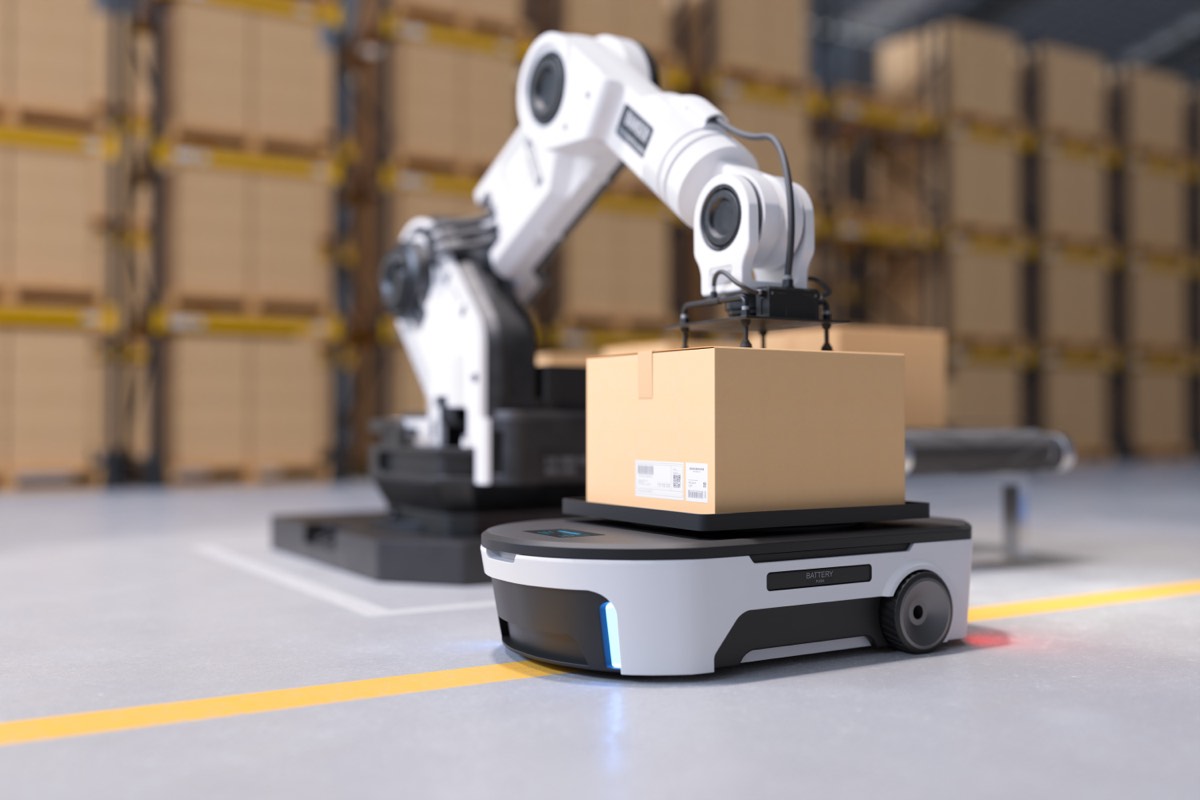
From autonomous mobile robots to goods-to-person systems, warehouse automation has moved from pilot to full production. We put five leading platforms through a rigorous head-to-head evaluation.

Real-time digital replicas of physical supply chain networks are giving operations teams end-to-end visibility that was impossible five years ago. Here is how they work in practice and what implementation actually costs.

The chief logistics officer role has moved from operational oversight to strategic necessity. What changed, who is driving it, and what it means for logistics teams across the organization.
