Real-time digital replicas of physical supply chain networks are giving operations teams the kind of end-to-end visibility that was impossible five years ago. Here is how they work in practice and what implementation actually costs.

Key Takeaways
When a Category A hurricane made landfall along the Gulf Coast in September 2025, a major consumer goods company with distribution operations across six southeastern states had its digital twin platform running continuous simulations before the storm reached the coast. Within four hours of the National Hurricane Center's track update, the system had modeled 14 alternative routing scenarios, flagged three distribution centers at risk of access disruption, identified carrier capacity that could be pre-positioned in unaffected markets, and generated a recommended inventory reallocation plan that operations leadership approved by end of business that same day. A competing company with comparable network scale but no digital twin capability spent the following 72 hours manually aggregating data from disconnected systems before its team could begin developing a response plan. According to a post-event analysis by the Gartner Supply Chain Research Group, organizations with real-time digital twin platforms responded to the disruption 4.2 times faster on average than those relying on traditional static planning.
"The value of a digital twin is not what it shows you on a normal day," said the vice president of supply chain technology at a Fortune 200 consumer packaged goods company. "The value is what it lets you do in the first four hours of a crisis, when every hour of delay translates directly into lost revenue and broken customer commitments."
The term "digital twin" has been applied so liberally by software vendors in the past three years that it has become nearly meaningless as a product descriptor. To cut through the noise, a functional definition grounded in actual deployment characteristics is necessary. A genuine supply chain digital twin has three core properties: it is a live, continuously updated replica of the physical network (not a periodic snapshot); it is bidirectional (meaning decisions made in the digital model can generate action recommendations that flow back into execution systems); and it incorporates probabilistic modeling capabilities that allow operators to simulate the impact of disruptions, demand shifts, or capacity changes before committing to a course of action.
By this definition, many products marketed as digital twins are actually sophisticated dashboard tools. They aggregate data from multiple sources and present it in a unified interface, which has real value, but they lack the simulation and optimization layer that distinguishes a true digital twin from a well-designed visibility platform.
The distinction matters for procurement decisions. Organizations that purchase a dashboard product expecting digital twin capabilities will be disappointed. Those that understand they are buying a visibility layer first, with a roadmap to add simulation and optimization capabilities in subsequent phases, are far more likely to generate positive ROI within their initial business case timeline.
Every supply chain digital twin is only as good as the data feeding it. And in most enterprise logistics environments, that data lives in a collection of systems that were never designed to communicate with each other: an ERP system that holds financial and inventory data, a TMS that manages carrier relationships and freight execution, a WMS governing warehouse operations, IoT sensors tracking physical asset locations, and carrier API feeds that vary in reliability, latency, and data structure across dozens of partners.
Integrating these sources into a coherent, real-time data fabric is the work that determines whether a digital twin delivers on its promise. It is also the work that most vendors minimize during the sales process. Based on conversations with operations technology leaders at eight organizations that have completed digital twin implementations in the past 24 months, the data integration phase accounted for an average of 58 percent of total implementation cost and consistently exceeded initial timeline estimates by three to five months.
The most common integration failure points include:
"The technology was ready long before our data was. We had to stop thinking about this as a software project and start thinking about it as a data governance initiative with a software component. That reframe is what eventually made it work." Director of Supply Chain Systems, Global Industrial Manufacturer
The build-versus-buy decision for supply chain digital twin technology comes down to one primary variable: how idiosyncratic is your network? Companies with highly standardized multimodal supply chains, whose freight moves on conventional carrier lanes, through conventional distribution architectures, and is managed through commonly available TMS and WMS platforms, are consistently better served by established commercial platforms. The three vendors attracting the most serious enterprise deployments as of early 2026 are o9 Solutions, Llamasoft (now part of Coupa), and Kinaxis RapidResponse.
A global pharmaceuticals distributor implemented o9 Solutions' digital twin platform across its North American network in 2024. The deployment covered 23 distribution centers, 400-plus carrier relationships, and a SKU catalog of 180,000 active items. Implementation took 14 months and cost approximately $4.2 million including integration, training, and the first year of licensing. Within six months of go-live, the company reported a 31 percent reduction in expedited freight spend and an 18 percent improvement in inventory positioning accuracy. The platform paid back its implementation cost within 22 months.
A major North American retailer took a different path, building a proprietary digital twin platform on a cloud-native data architecture using a combination of internal engineering resources and specialist consultants. The decision was driven by the company's non-standard fulfillment model, which blended ship-from-store, traditional DC operations, and a dark store network in a way that no commercial platform could replicate without significant customization. The build took 26 months and cost an estimated $11 million. The company's supply chain leadership argues the investment was justified by the platform's ability to model scenarios that no off-the-shelf product could handle.
A third example: a mid-sized 3PL serving the food and beverage sector implemented Kinaxis RapidResponse as a planning-layer digital twin, connecting it to existing TMS and WMS platforms via pre-built connectors. Implementation was the fastest of the three examples at nine months, and total cost came in below $2 million. The tradeoff was limited real-time execution-layer visibility; the platform excels at planning and scenario simulation but relies on separate systems for operational tracking.
As the technology matures and data integration tooling improves, the barriers to entry for meaningful digital twin deployment are declining steadily. Organizations that begin building the data foundations now, investing in API standardization, data governance frameworks, and master data quality programs, will be positioned to deploy and scale these platforms at a fraction of the cost and timeline their predecessors faced. Those that continue to defer the underlying data work are not just falling behind on digital twin adoption. They are accumulating the technical debt that will make every future visibility investment harder and more expensive than it needs to be.

A new generation of AI tools promises to cut transportation costs by 15 to 30 percent. Eighteen months of real-world testing reveals results more nuanced than vendors admit.
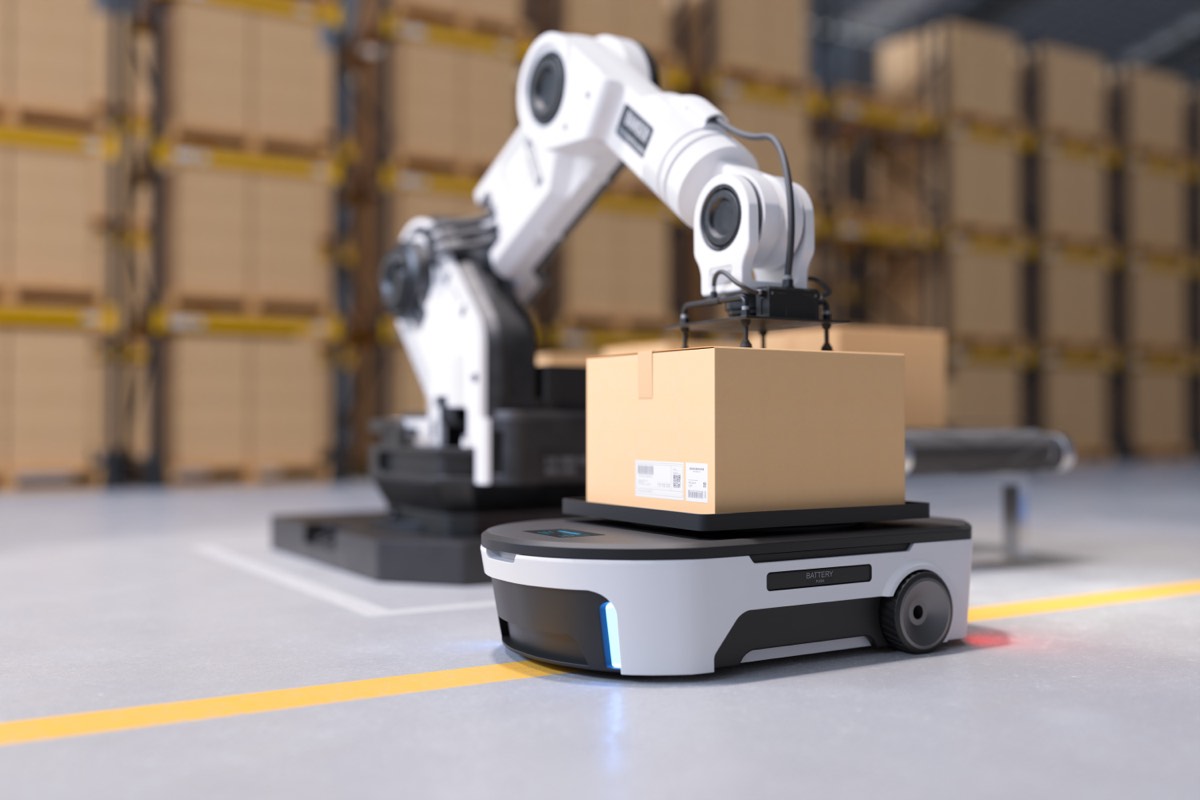
From AMRs to goods-to-person systems, warehouse automation has moved from pilot to full production. We put five leading platforms through a rigorous head-to-head evaluation.

The logistics teams with the most boardroom influence share a common capability: translating operational data into financial narratives that executives act on.
