From autonomous mobile robots to goods-to-person systems, warehouse automation has moved from pilot to full production at hundreds of facilities. We put five leading platforms through a rigorous head-to-head evaluation.
Key Takeaways
In the fourth quarter of 2024, a major e-commerce fulfillment operator in the Pacific Northwest commissioned a new 680,000-square-foot distribution center with zero fixed conveyor infrastructure. Every unit movement in the facility would be managed by a fleet of 340 autonomous mobile robots coordinating through a centralized orchestration platform. At peak, the facility processes 85,000 units per day with a picker error rate of 0.004 percent, a figure that would have required a workforce nearly three times larger to achieve with manual operations just five years ago. The facility is not an anomaly. According to the Interact Analysis Global Warehouse Automation Report 2025, AMR installations across North America grew 67 percent year-over-year in 2024, and 1 in 3 new warehouse facilities commissioned globally in 2025 included some form of autonomous mobile robot system.
"We are past the proof-of-concept phase across the industry," said the chief supply chain officer of a top-10 U.S. third-party logistics provider. "The question is no longer whether to automate. The question is which system matches your volume profile and how quickly you can get your people ready to work alongside it."
The first decision any warehouse operator faces when evaluating automation is not which vendor to select. It is which architectural approach fits the operation's physical constraints, volume profile, and capital structure. The three dominant paradigms each carry distinct tradeoffs that no vendor will fully articulate in a sales presentation.
Fixed conveyor and sortation systems represent the most mature technology. Vendors like Dematic and Vanderlande have deployed these systems across thousands of facilities over three decades. Peak throughput is high, often exceeding 100,000 units per hour in large installations, and the technology is proven. The liabilities are equally well understood: fixed infrastructure is expensive to reconfigure, installation timelines range from 12 to 24 months, and the systems are poorly suited to facilities with high SKU variability or seasonal volume swings that exceed 40 percent of baseline capacity.
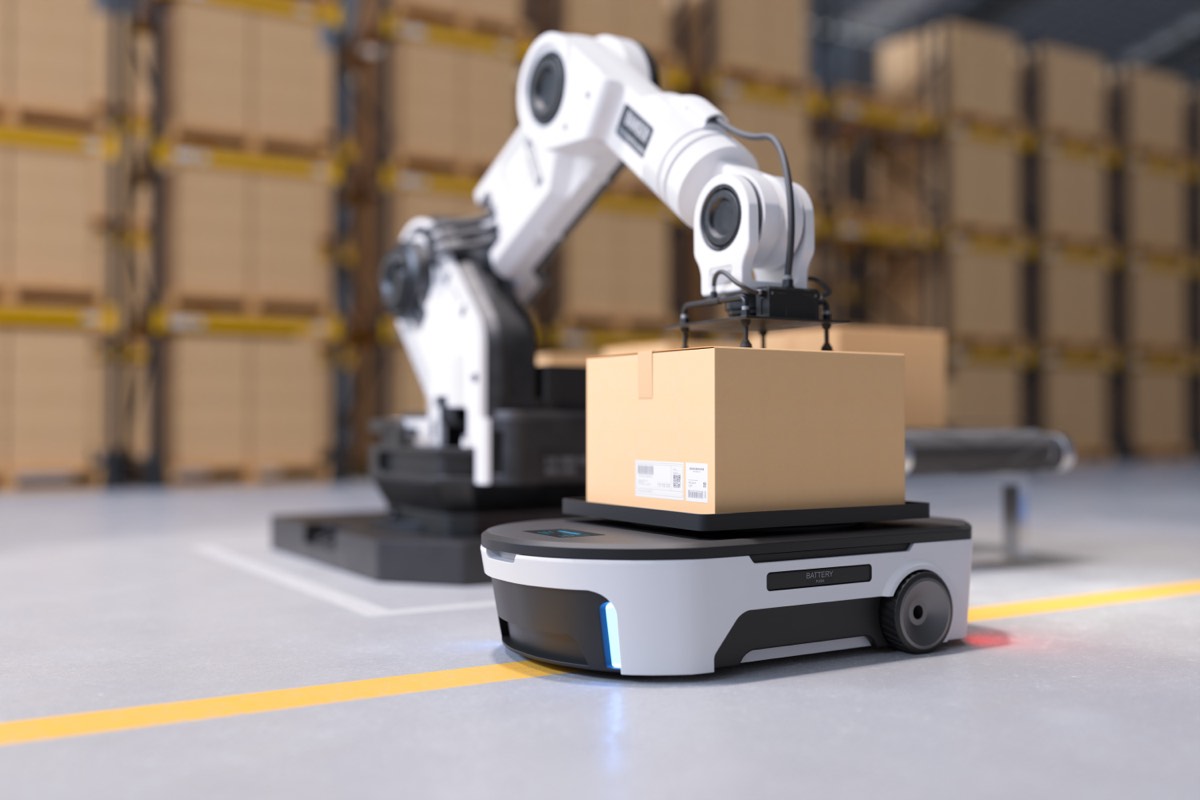
Autonomous mobile robots address the flexibility problem directly. AMR platforms can be deployed in phases, reconfigured in days rather than months, and scaled up or down in response to volume changes by adding or removing robots from the fleet. They work around existing infrastructure rather than replacing it, which makes them the preferred choice for retrofit projects. The tradeoff is peak throughput: most AMR deployments top out at 40,000 to 60,000 picks per day per zone, which is sufficient for the majority of distribution operations but falls short of what fixed sortation systems achieve in ultra-high-volume environments.
Goods-to-person systems, in which inventory is stored in dense automated storage structures and brought to stationary human workstations on demand, represent the highest-performance architecture for high-SKU, high-velocity environments. Systems like AutoStore's grid-based cube storage deliver exceptional storage density (up to four times more SKUs per square foot than conventional shelving) and picking rates that routinely exceed 500 units per operator hour. The capital requirements are substantial, typically $15 to $40 million for a mid-sized installation, and implementation timelines average 14 to 20 months.
Over six months of structured evaluation, we assessed five platforms across eight criteria: throughput at peak capacity, picking accuracy, implementation timeline, software integration capabilities, labor displacement ratios, total cost of ownership over five years, vendor financial stability, and reported client satisfaction scores from independent reference checks.
Locus Robotics performed strongly in retrofit scenarios. The platform's unit-load AMRs work alongside human pickers rather than replacing them, which accelerates adoption and reduces labor transition friction. Reference clients in apparel and consumer electronics reported productivity improvements of 2x to 3x per picker compared to conventional warehouse-with-cart operations. Implementation timelines averaged 14 weeks for a 200,000-square-foot facility, the fastest among the platforms evaluated.
6 River Systems, now part of Shopify's fulfillment infrastructure, distinguishes itself through its collaborative robot design and the strength of its warehouse management system integration layer. The platform's "Chuck" units navigate dynamically and communicate pick instructions directly to associates, reducing training time to an average of 45 minutes per new operator. Throughput benchmarks were slightly lower than Locus in comparable environments, but client satisfaction scores were consistently high.
Geek+ brought the broadest hardware portfolio, including AMRs for piece-picking, pallet movement, and sortation, making it the strongest candidate for operations requiring multiple automation use cases under a single software platform.
AutoStore's grid system delivered the highest picking accuracy in the evaluation at 99.997 percent and the best storage density metrics. It is the right answer for operations with 30,000-plus active SKUs and consistent high daily order volumes. It is the wrong answer for operations with irregular volumes, large or irregular-dimension products, or limited capital budgets.
Symbotic-style high-throughput systems, represented in our evaluation by a Symbotic installation at a major grocery distributor, operate at a different scale entirely. These systems are engineered for the most demanding distribution environments, where throughput requirements and capital budgets both exceed conventional ranges. ROI timelines were the longest of the group, averaging 4.5 to 6 years, but the operational cost reductions after full ramp were the most significant we observed.
"We made the mistake of selecting technology based on the vendor's best-case throughput numbers rather than our actual order profile. We over-built for peak and under-designed for the flexibility we needed during shoulder seasons. That lesson cost us 18 months and a significant amount of money to correct." VP of Operations, Regional Third-Party Logistics Provider
The most consistent finding across every deployment we examined is that technology selection matters less than labor transition planning. Facilities that invested in structured reskilling programs, clear internal communication about role changes, and phased deployment schedules that allowed workers to adapt incrementally consistently outperformed facilities that treated automation as a pure capital equipment decision. Several of the deployment failures we reviewed shared a common pattern: the technology performed as specified, but workforce resistance, high turnover during the transition period, and a lack of supervisory training in managing human-robot collaborative environments undermined the projected efficiency gains.
The facilities achieving the best results had started labor transition planning six to nine months before go-live, not after. They had identified internal champions at the floor supervisor level, designed new role definitions that captured worker expertise in exception handling and robot supervision, and built compensation structures that rewarded productivity gains rather than simply replacing headcount with machines.
As warehouse automation technology continues to mature and installation costs decline, the facilities that will separate themselves from the competition are those treating this as an organizational change management initiative as much as a capital investment program. The robot fleets are increasingly reliable. The real variable is the human infrastructure built around them.

A new generation of AI tools promises to cut transportation costs by 15 to 30 percent. We talked to the logistics teams testing them for 18 months, and the results are more nuanced than vendors admit.

Real-time digital replicas of physical supply chain networks are giving operations teams end-to-end visibility that was impossible five years ago. Here is how they work and what implementation actually costs.
Supply chain disruptions have forced a fundamental rethink of inventory strategy. The shift from lean to buffer stock is reshaping warehouse capacity requirements and supplier relationships.
