Rules-of-origin requirements under USMCA are driving a consequential reshuffling of supplier relationships and freight lanes across the continent. Here is how the best procurement teams are navigating it.

Key Takeaways
Five years after the United States-Mexico-Canada Agreement replaced NAFTA, its rules-of-origin provisions are reshaping North American supply chains in ways that are now measurable in freight data and sourcing budgets. A 2025 National Foreign Trade Council survey of 410 U.S. importers found that 78% had experienced at least one shipment delay or denial attributable to USMCA rules-of-origin non-compliance. That figure is not a compliance failure in the traditional sense. It is evidence that the agreement's structural requirements, particularly its regional value content thresholds and tariff-shift tests, are materially more demanding than what the old NAFTA regime required, and that most supply chains were not built to satisfy them.
"USMCA is not NAFTA with a new name," said the chief procurement officer of a Midwest-based industrial manufacturer. "The documentation requirements alone have changed how we evaluate every supplier relationship in Mexico and Canada."
The two primary mechanisms through which USMCA determines whether goods qualify for preferential tariff treatment are regional value content calculation, known as RVC, and the tariff classification change test, commonly called the tariff-shift rule. Under RVC, a product must contain a specified percentage of North American content by value. Under tariff-shift, the imported inputs used to produce a good must undergo a change in their Harmonized System tariff classification by the time the finished product is exported. The threshold percentages and applicable tariff-shift rules vary by product category, and for sectors like automotive, apparel, and agriculture, they are significantly more restrictive than NAFTA equivalents. For the automotive sector specifically, USMCA requires 75% RVC for passenger vehicles and 70% for light trucks, compared to NAFTA's 62.5%. It also introduced a Labor Value Content requirement mandating that 40% to 45% of vehicle content be produced by workers earning at least $16 per hour. The practical effect has been to create a compliance documentation burden that flows upstream through the supply chain to Tier 2 and Tier 3 suppliers who have no prior experience generating the required certifications. A 2025 Center for Automotive Research study found that 61% of auto-sector Tier 2 suppliers in Mexico lacked the internal systems to produce accurate RVC calculations, creating a bottleneck that has delayed or disqualified shipments throughout the corridor.
The headline story of USMCA's economic impact is Mexico's emergence as the dominant beneficiary of North American supply chain restructuring. According to Mexico's Ministry of Economy, the country attracted an estimated $48 billion in new manufacturing investment commitments in 2025 from companies restructuring their sourcing to qualify for USMCA preferential treatment. Cross-border truck freight between Mexico and the United States reached a record 6.9 million crossings in 2025, a 14% increase over 2022 levels, according to Bureau of Transportation Statistics data published in April 2026. The Laredo-Colombia bridge corridor alone now handles more trade volume than the entire U.S.-Canada surface freight network did a decade ago. But the surge in USMCA-qualifying freight has exposed a parallel surge in documentation complexity. Certificate of origin requirements under USMCA are self-certified, meaning the exporter bears direct legal liability for the accuracy of origin claims. U.S. Customs & Border Protection's enforcement data shows that origin-related penalty assessments on Mexico-origin goods increased 53% in 2025, driven primarily by inaccurate RVC calculations and missing supporting documentation rather than outright fraud. For logistics operators moving apparel, which faces a yarn-forward tariff-shift rule requiring that fibers, yarns, and fabrics all originate in the USMCA region, the documentation burden extends to raw material suppliers in multiple countries, creating a traceability challenge that many mid-market manufacturers are still not equipped to manage.
"Every time we add a new Mexican supplier to qualify product under USMCA, we are essentially adding a compliance audit to our onboarding checklist. That takes time and specialized expertise that most procurement teams don't have internally." VP of Global Sourcing at a North American apparel manufacturer
The logistics organizations that are managing USMCA compliance most effectively are approaching it as a supply chain design problem rather than a paperwork problem. That distinction matters operationally. The freight forwarders and 3PLs commanding premium rates in the Mexico corridor are those with in-house licensed customs brokers who specialize in USMCA origin determinations, not generalist operators who treat the documentation as an administrative step at the end of the booking process. A 2025 Armstrong & Associates survey of North American freight forwarder pricing found that USMCA-specialist forwarders were charging 12% to 18% above market rates for Mexico cross-border shipments, and that clients were paying the premium because the alternative, failed clearance and return freight costs, was more expensive. The steps that leading supply chain teams are taking to build USMCA-compliant sourcing frameworks include:
The USMCA review clause, which allows any party to trigger a joint review of the agreement beginning in 2026, with a mandatory review in 2036, adds a longer-term dimension to the strategic calculus. Companies that have built USMCA-compliant supply chains are watching the review process closely for signals about whether the automotive LVC requirements, the digital trade provisions, and the agricultural market access chapters will be modified in ways that alter the freight economics they have been optimizing around. The organizations best positioned to navigate whatever adjustments emerge from that review will be those that have treated USMCA compliance as a core supply chain capability rather than a regulatory checkbox, because the capacity to adapt quickly is, at its root, a function of knowing your supply chain well enough to recertify it on short notice.

More than 12,000 customs rule changes were issued globally in 2025. We break down what changed and what the best compliance teams are doing now.
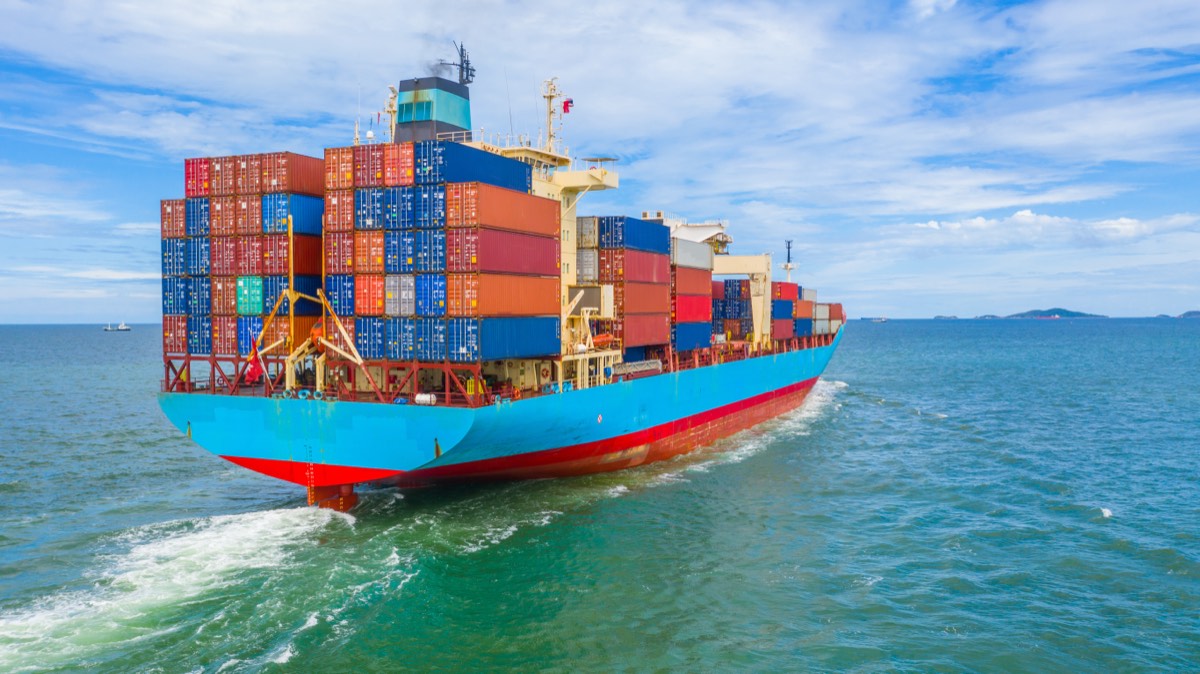
Regulators on both coasts are moving to impose new performance standards on major container ports. Shippers have a narrow window to prepare.
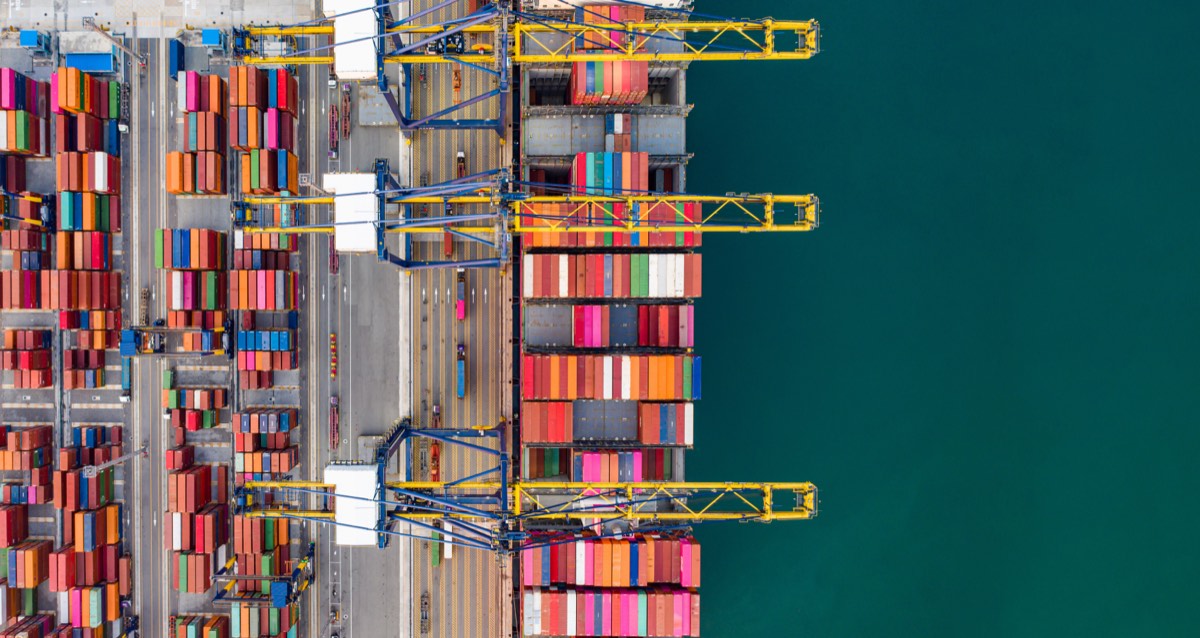
Geopolitical pressure, trade policy shifts, and nearshoring momentum are redrawing the routes that move global goods. Here is what the new map looks like.
